CLIENT:
UNITED ROBOTICS GROUP
DURATION:
5 MONTHS
ROLE:
UX DESIGNER
project overview.
Collaborated with URG’s marketing team, robotics experts, and engineers to understand robot functionality and industry value (hospitality, intralogistics, education, etc.)
Conducted stakeholder interviews and deep-dived into documentation to build a storytelling framework, refined directly with the client.
Designed and iterated wireframes, flows, and layouts to create immersive experiences and clear interaction patterns.
Worked closely with developers to validate feasibility under time constraints.
Partnered with a UI designer to ensure design intent was preserved.
Results after the redesign: +50% increase in qualified leads in Q1.
Skills involved:
Stakeholder Interviews
Research & Documentation Analysis
Storytelling & Content Strategy
Wireframing
Interaction Design
Concept & Immersive Experience Design
Cross-functional collaboration
Client Presentations
business context.
United Robotics Group (URG), a leader in human-robot collaboration, had recently acquired the French robotics company Aldebaran—known for iconic robots like Pepper and Nao. Following this acquisition, URG needed to establish a strong digital presence from scratch to unify its brand, showcase its portfolio, and position itself as a key industry player.
challenge.
How do you transform highly complex robotics technology—often explained in technical jargon and aimed at experts—into a clear, engaging, and conversion-driven digital experience?
The challenge was to balance three competing needs:
Simplifying complexity without diminishing the innovation.
Addressing different audiences: industry partners, investors, and the press.
Building from scratch under tight deadlines, while ensuring scalability for future growth.
objectives.
The goal was to design a lead-generation platform that would:
Present URG’s robots in a way that was simple, clear, and engaging, while still showcasing their complex technology and innovation.
Demonstrate the value of robotics across industries (healthcare, education, hospitality, science, logistics) through tailored storytelling.
Drive engagement and convert interest into qualified leads by making the benefits of human-robot collaboration easy to understand for diverse audiences.
approach.
1/ Deep Understanding & Storytelling Strategy
Conducted stakeholder interviews across robotics divisions to extract positioning and value.
Immersed in technical documentation to identify differentiating features.
Designed a storytelling framework that simplified robotics into accessible narratives—balancing depth for experts with clarity for newcomers, both on robot pages and industry pages.
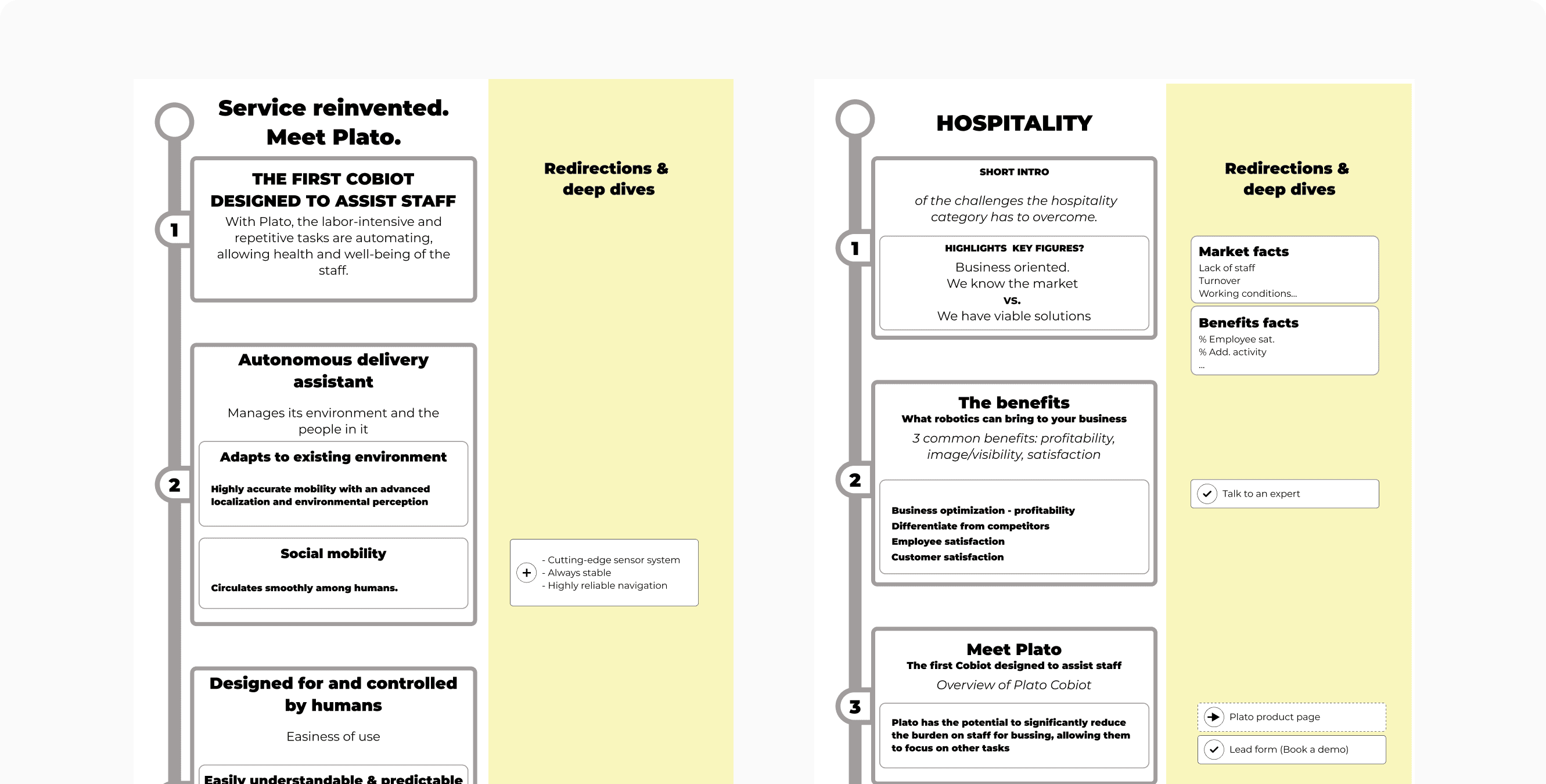
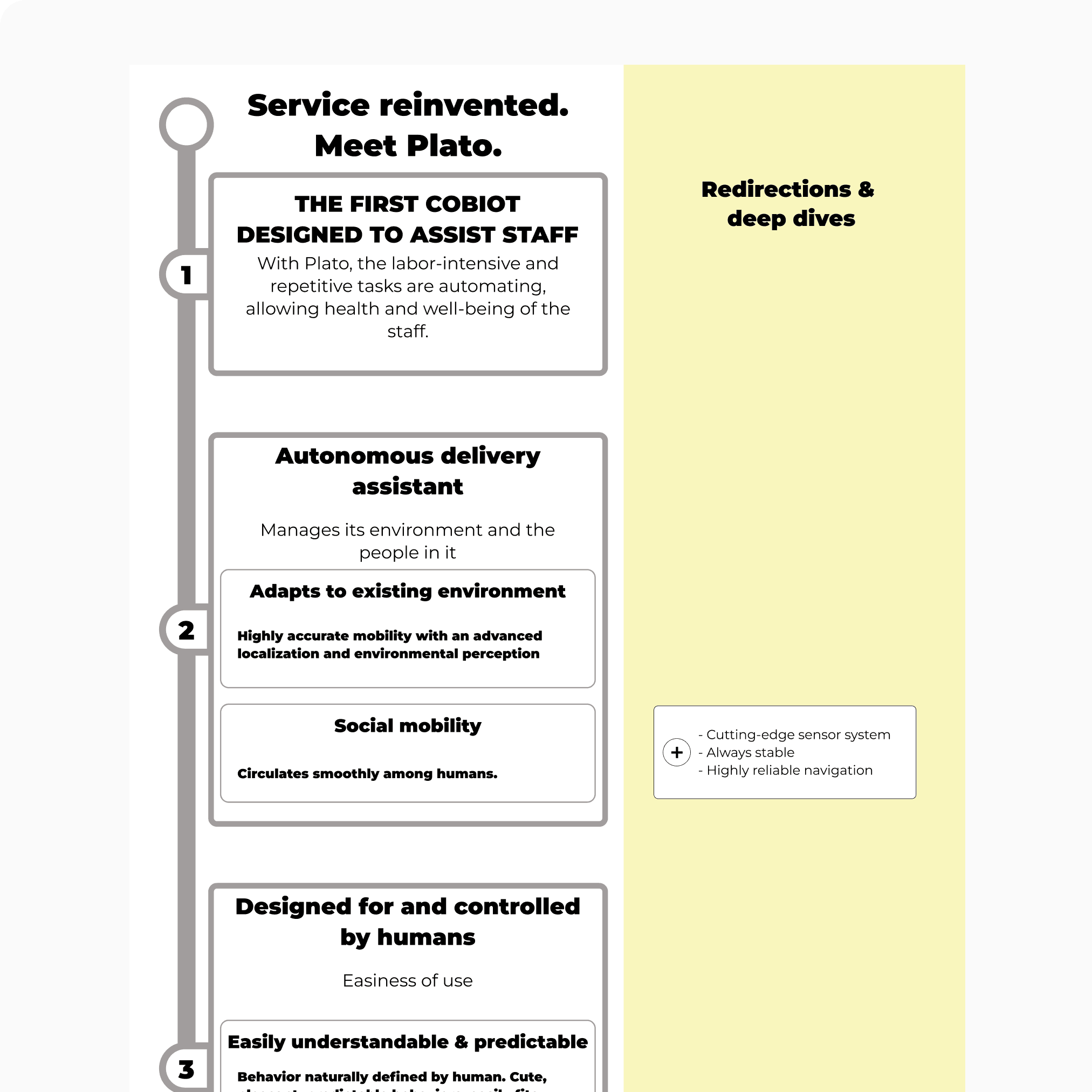
This storytelling framework combines a step-by-step narrative that highlights the key messages with a parallel layer of redirections and deep dives for users who want to explore further or take action.
2/ Structuring the Experience
Designed the site architecture to support both understanding and conversion.
Robots Pages – A Two-Step Narrative
Step 1: Immersive storytelling – Focused on what it does rather than how it works, encouraging seamless product discovery without distraction.
Step 2: Complementary information – Offered more technical details in a standard format for those seeking depth.
Contextualized CTAs – Placed strategically to generate leads and guide visitors toward relevant industries.
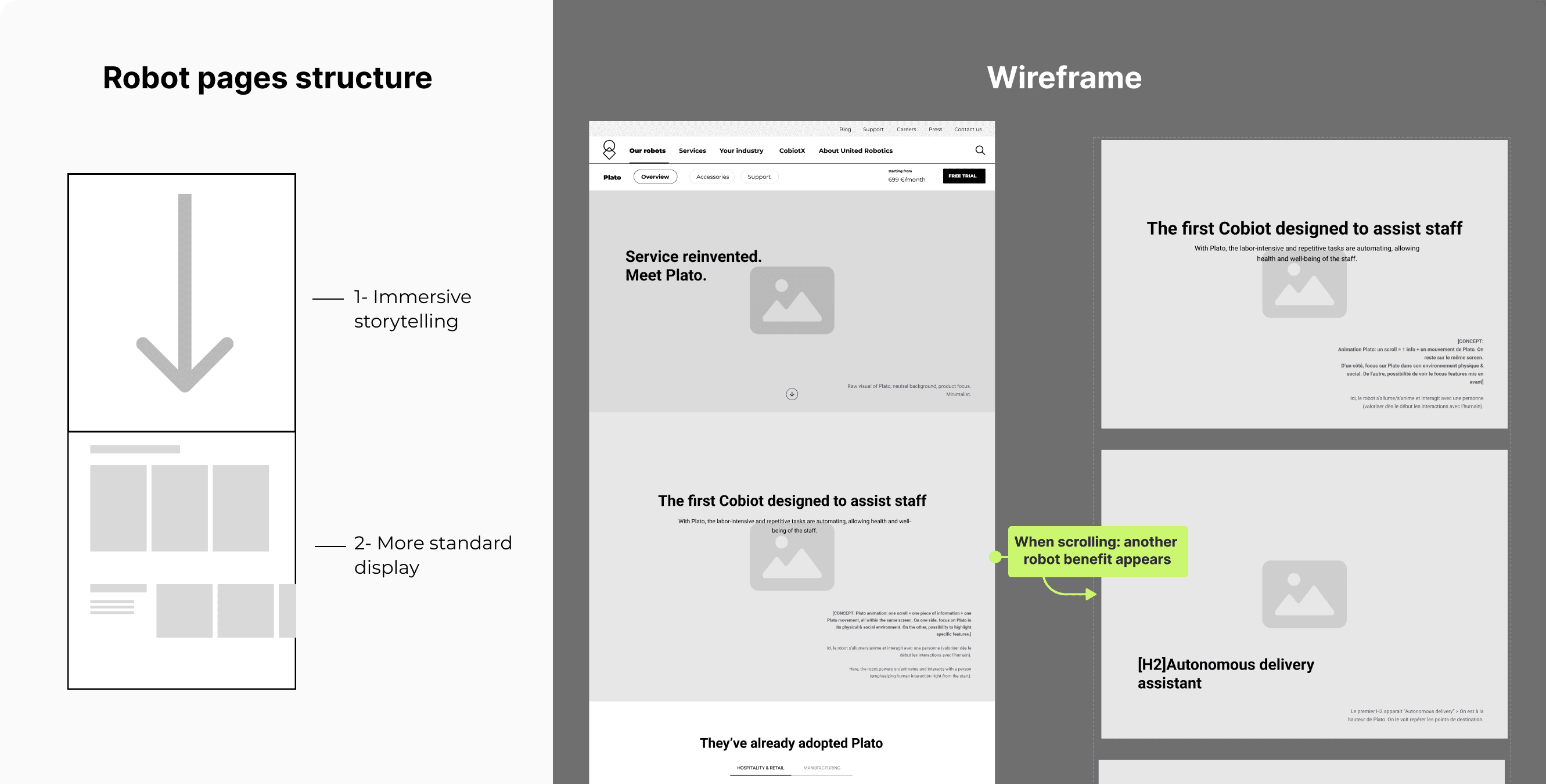
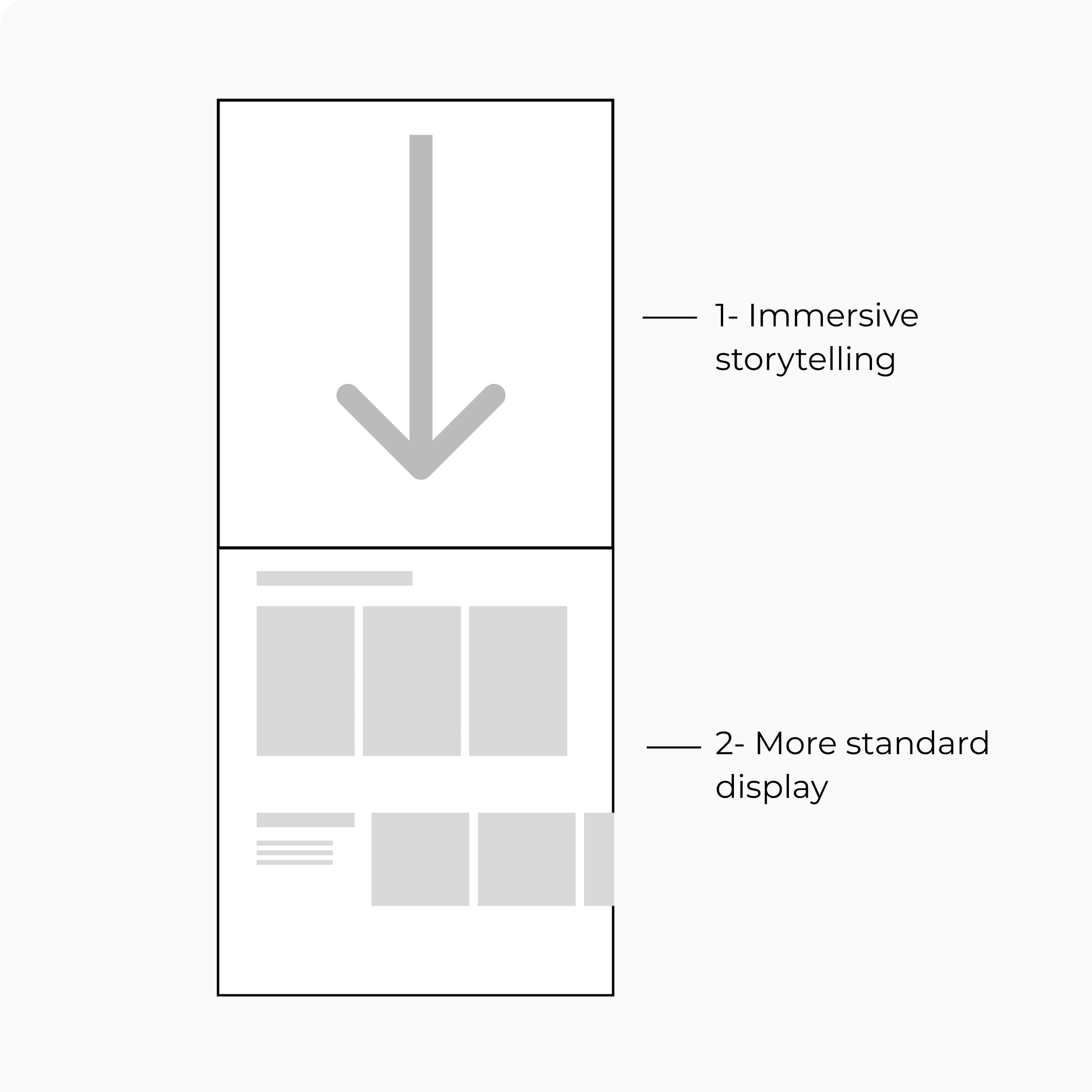
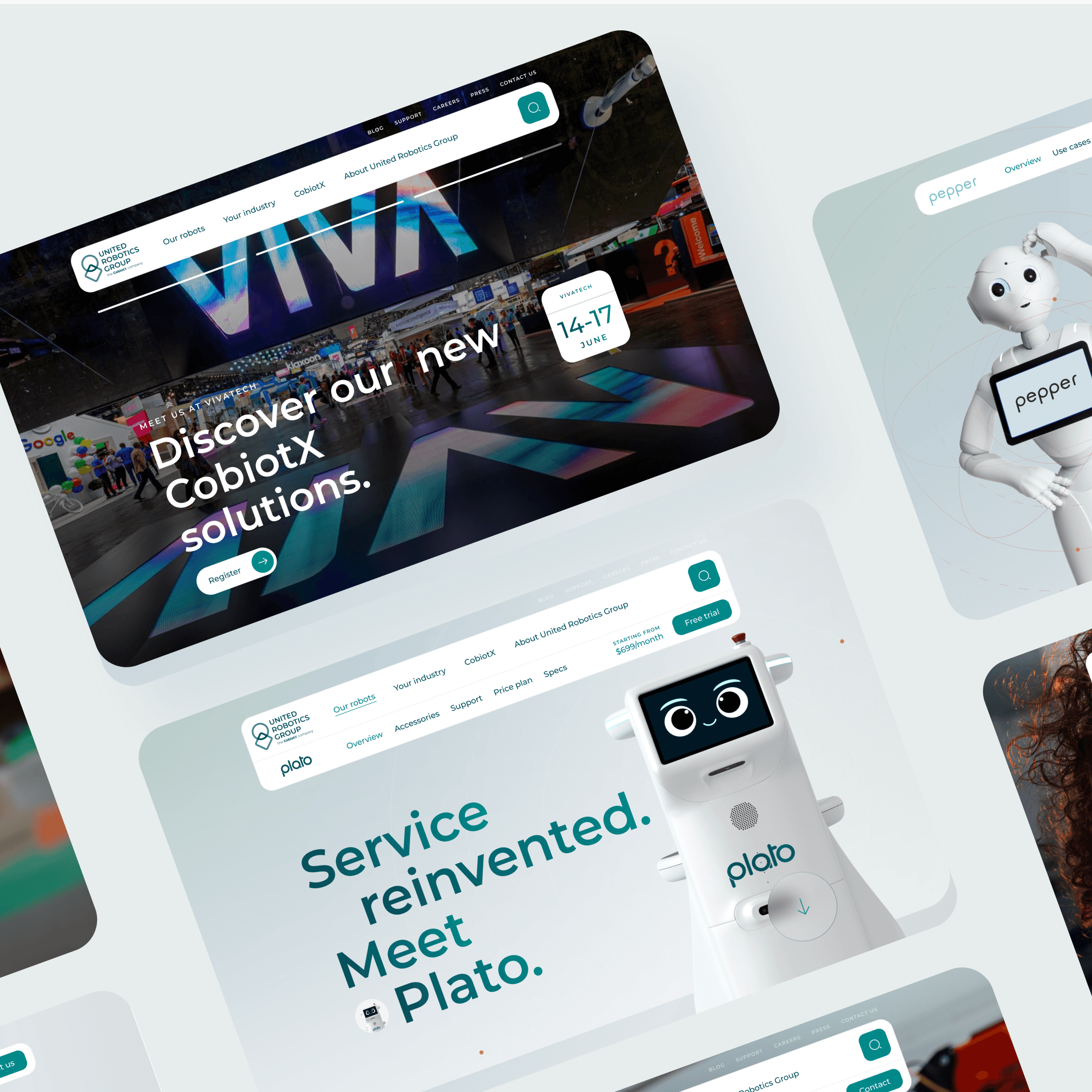
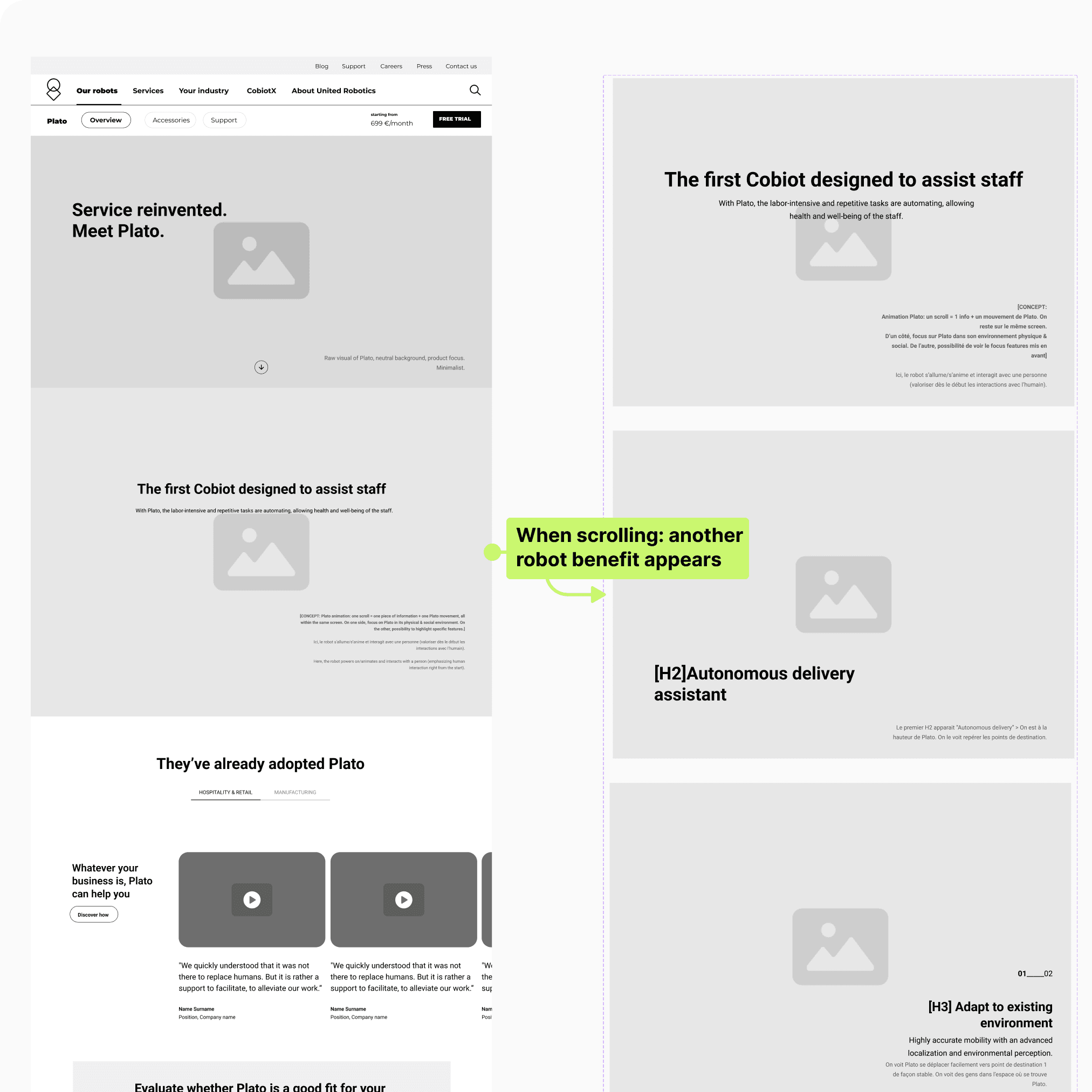
Extract of a robot page demonstrating immersive storytelling. I collaborated closely with the UI designer to bring the concept to life.
Industry Pages – Framing the Benefits
Applied the same storytelling framework to highlight the tangible benefits of robotics in each sector (e.g., reduced heavy lifting, fewer repetitive tasks, improved efficiency).
Focused on measurable impact (e.g., “2x more time with customers” “X kms of walking saved per day,” “X kg of load reduced”), presented as supporting employees—not replacing them.
Showcased specific opportunities by industry (e.g., new service models for limited-service restaurants, standardized experiences for chains with Plato).
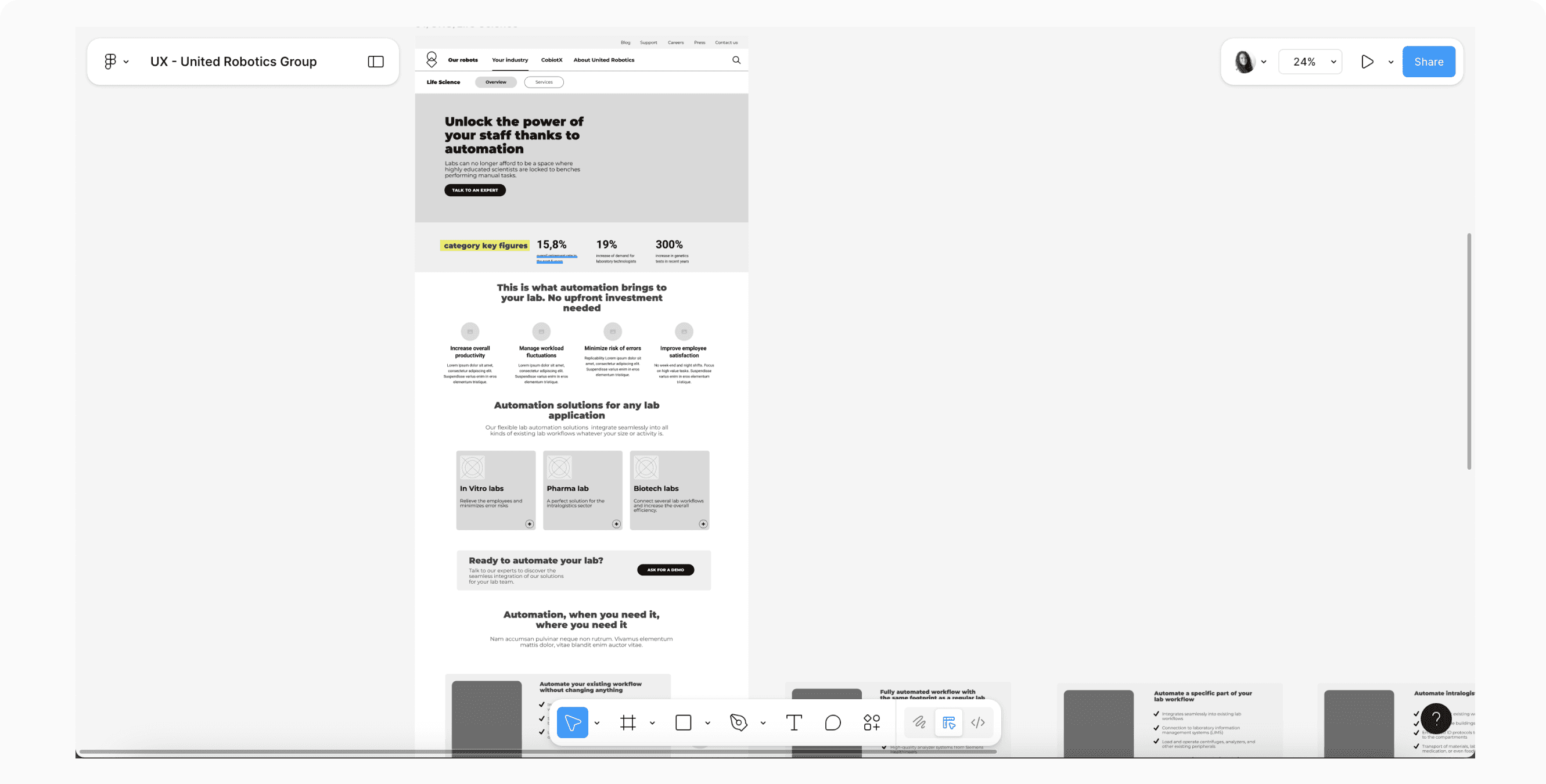
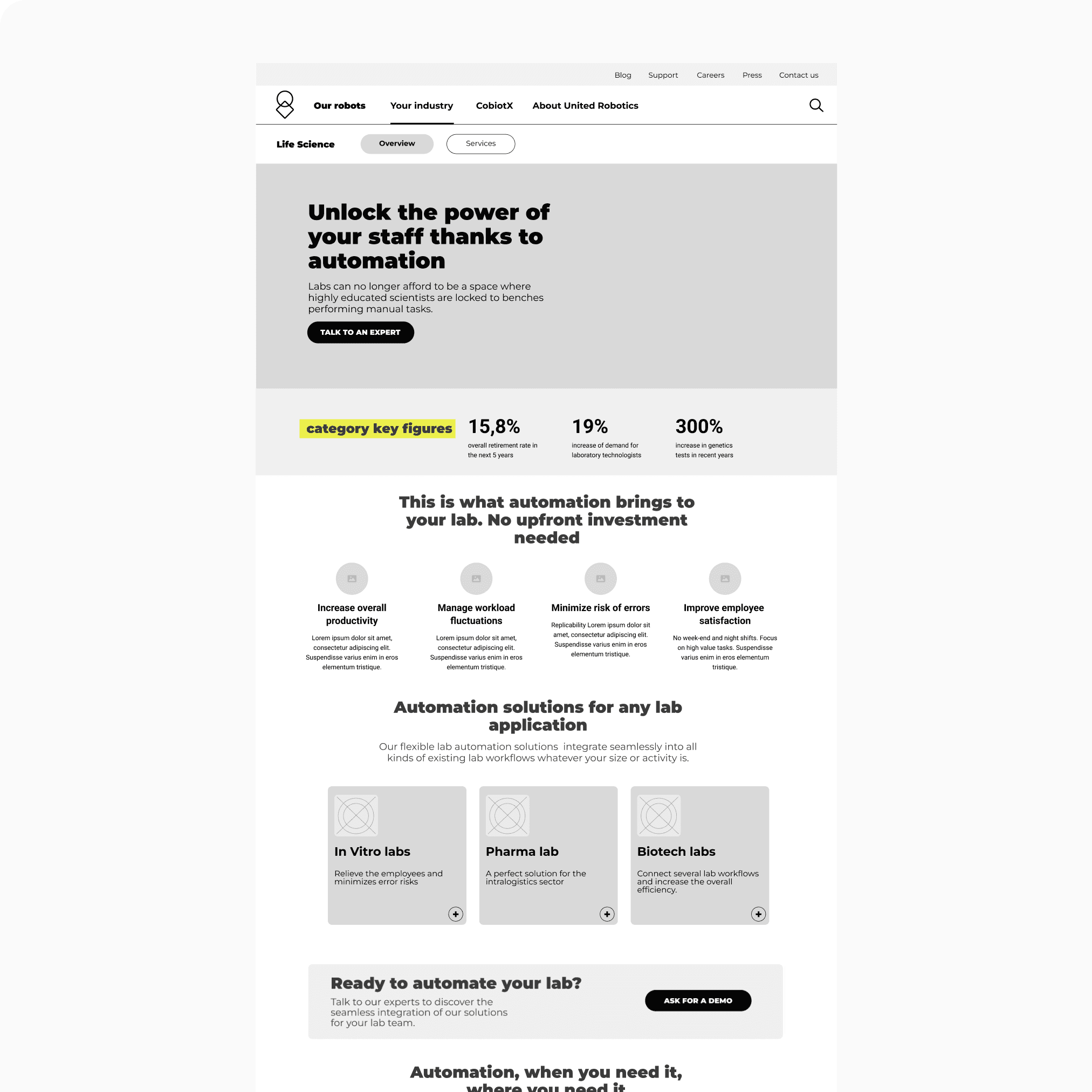
Wireframe of an industry page, highlighting the structure used to showcase measurable and human-centered benefits.
Extract of an industry page on the live site, showing how the benefits storytelling translates into the final experience.
Lead Generation Strategy
Defined three complementary ways to convert interest into leads:
In-page CTAs → triggered a pop-in, allowing visitors to submit interest while staying on the same page and continue browsing easily.
In-page forms (at the bottom of each page) → allowed conversion directly within the content without forcing navigation elsewhere.
Contact form → accessible via a “Get Your Robot” button in the main navigation and a “Contact Us” link in the top bar, redirecting to a dedicated contact page for more formal or high-intent inquiries. After submission, users landed on a Thank You page featuring a carousel of URG articles to encourage further exploration of the site.
Each lead-generation touchpoint was designed with its own continuation flow, depending on the context of the conversion, to maintain engagement after form completion.
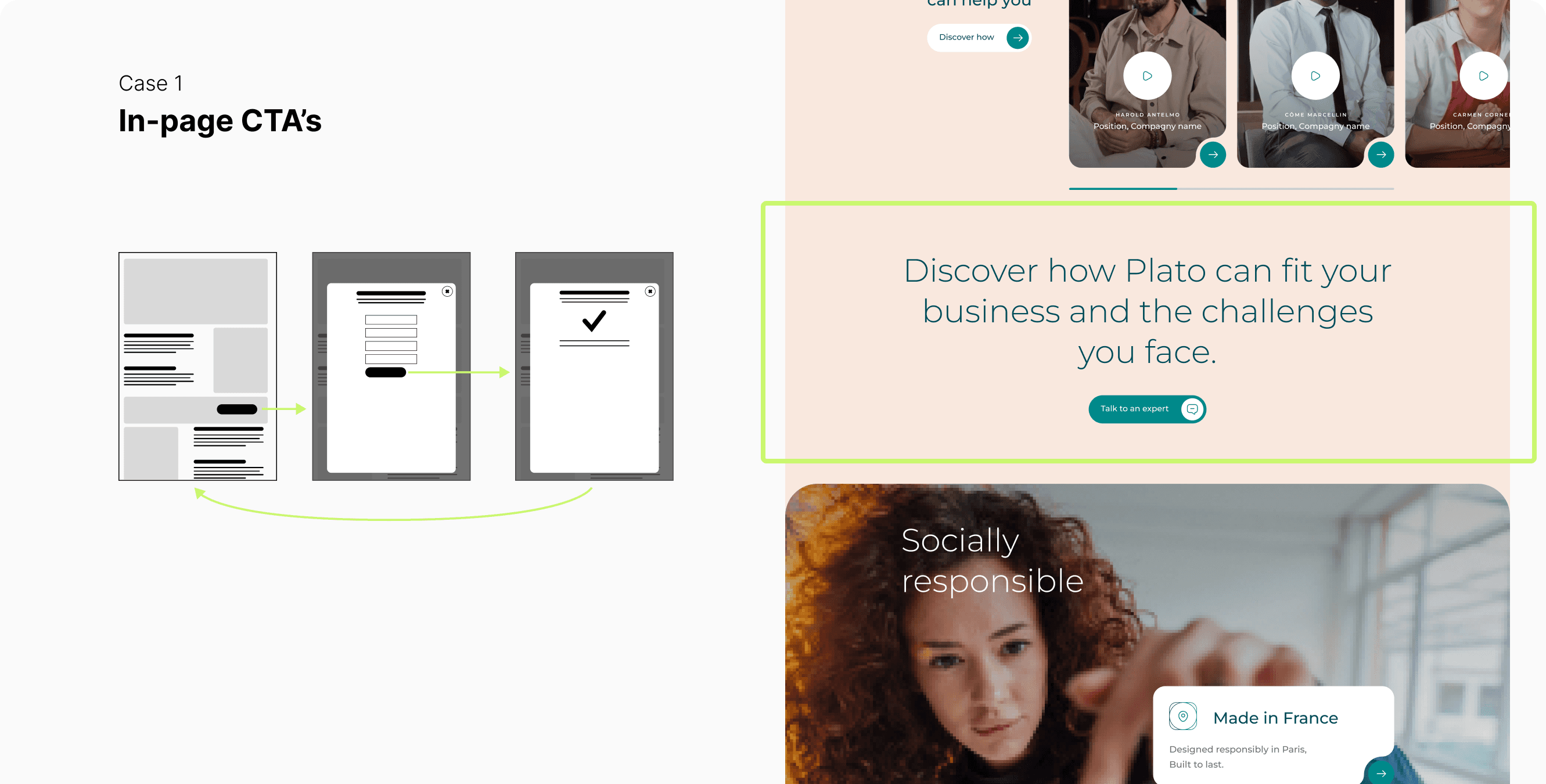
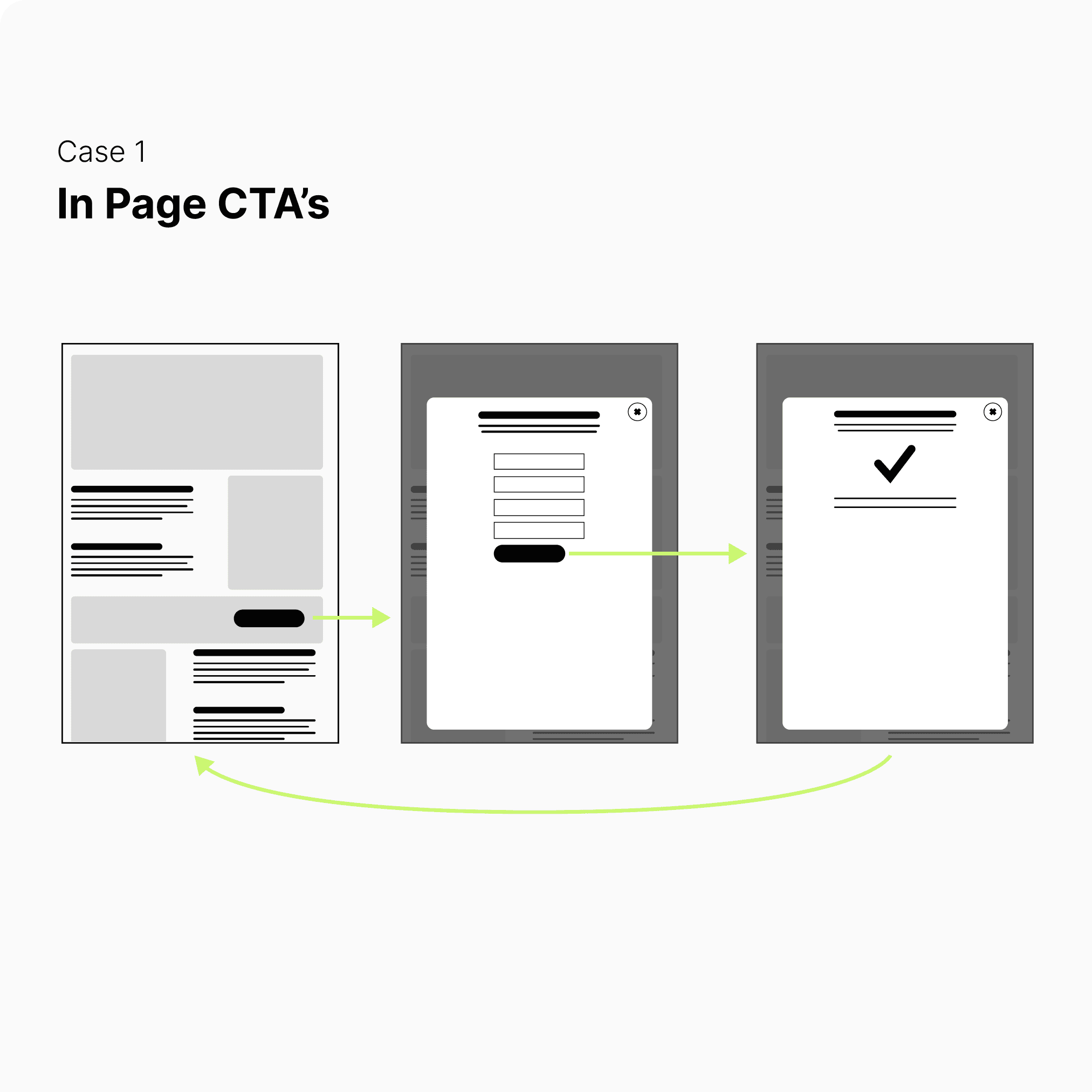
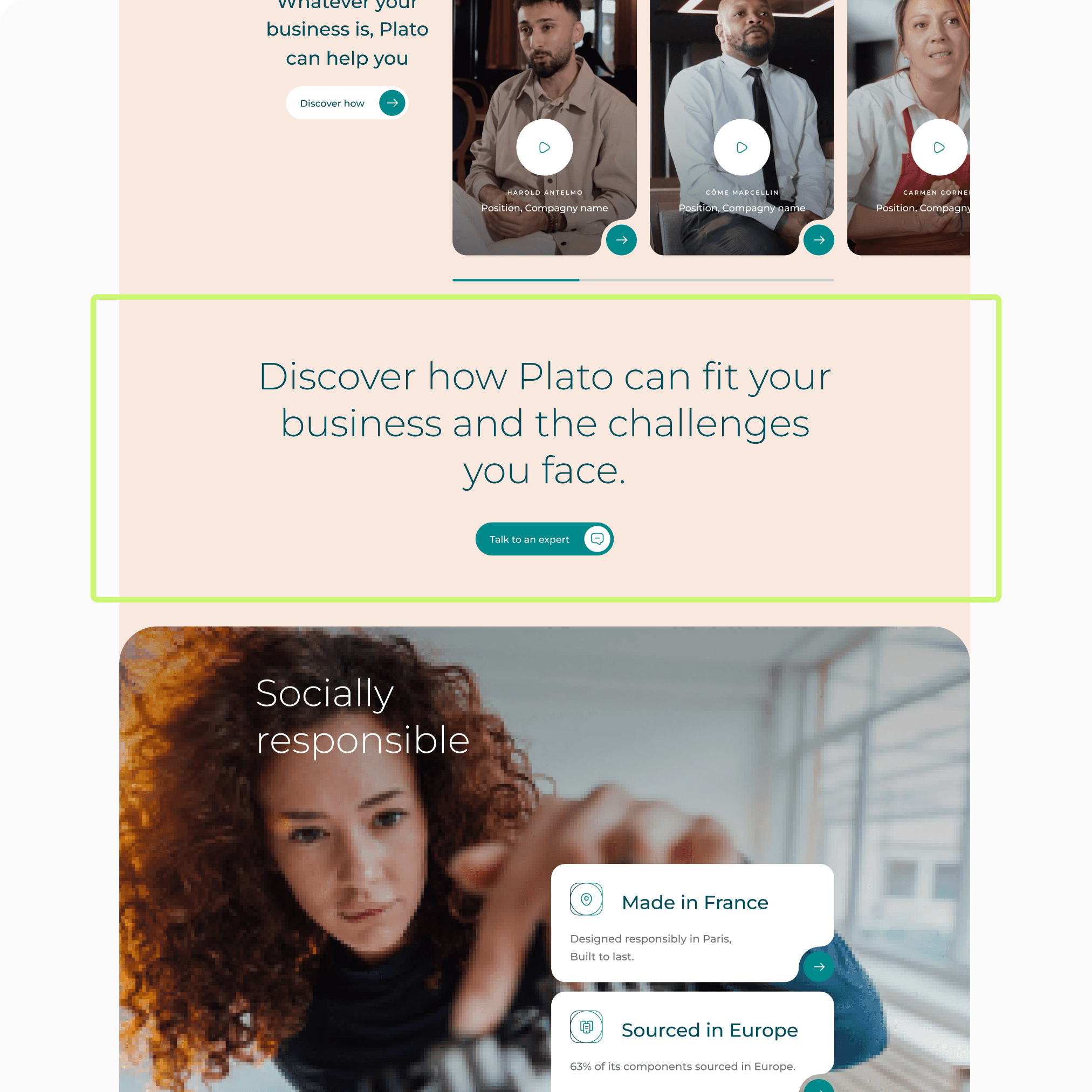
In-page CTA: Example of a contextual CTA integrated directly within the content, opening a pop-in to keep users on the same page.
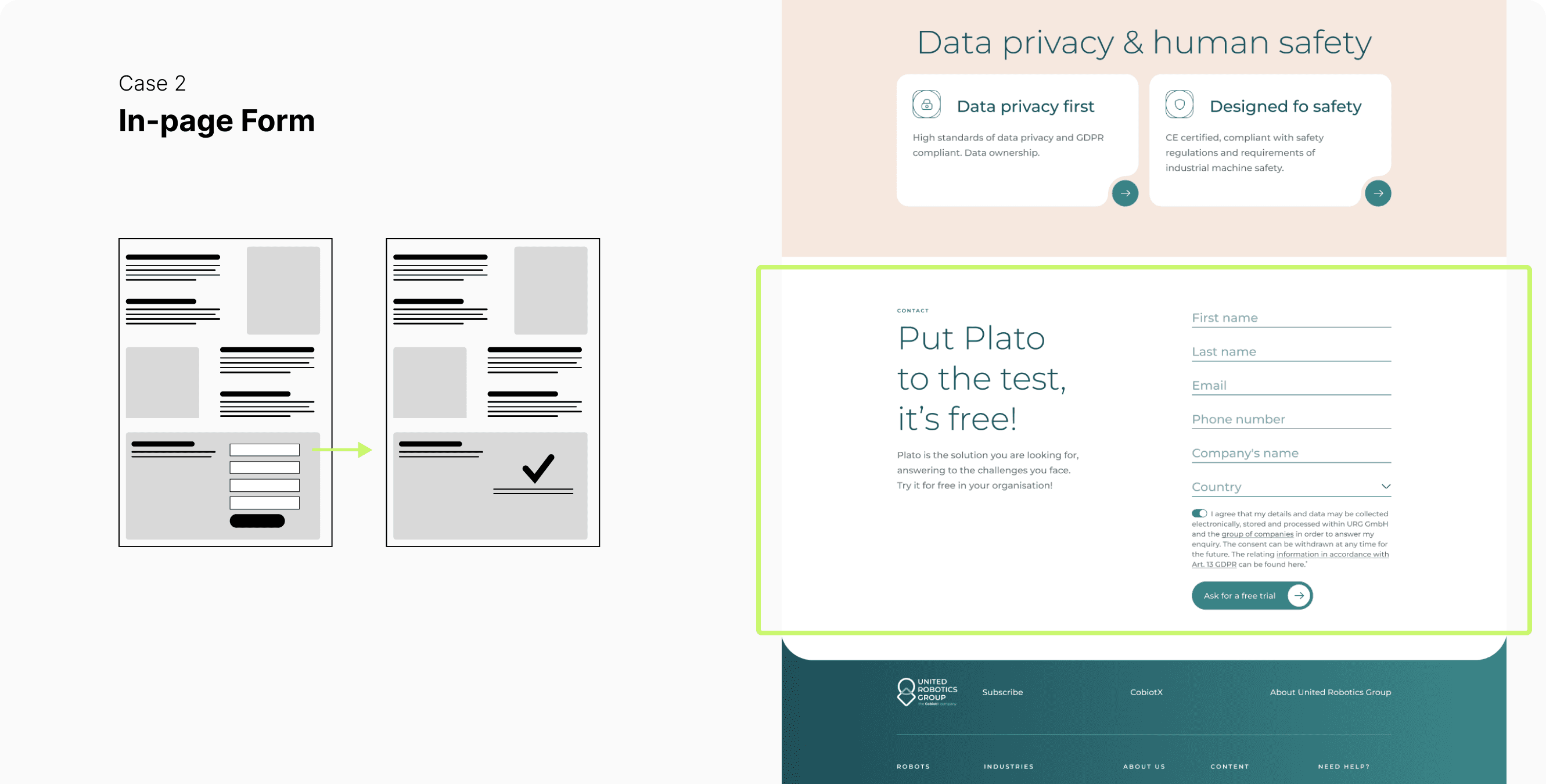
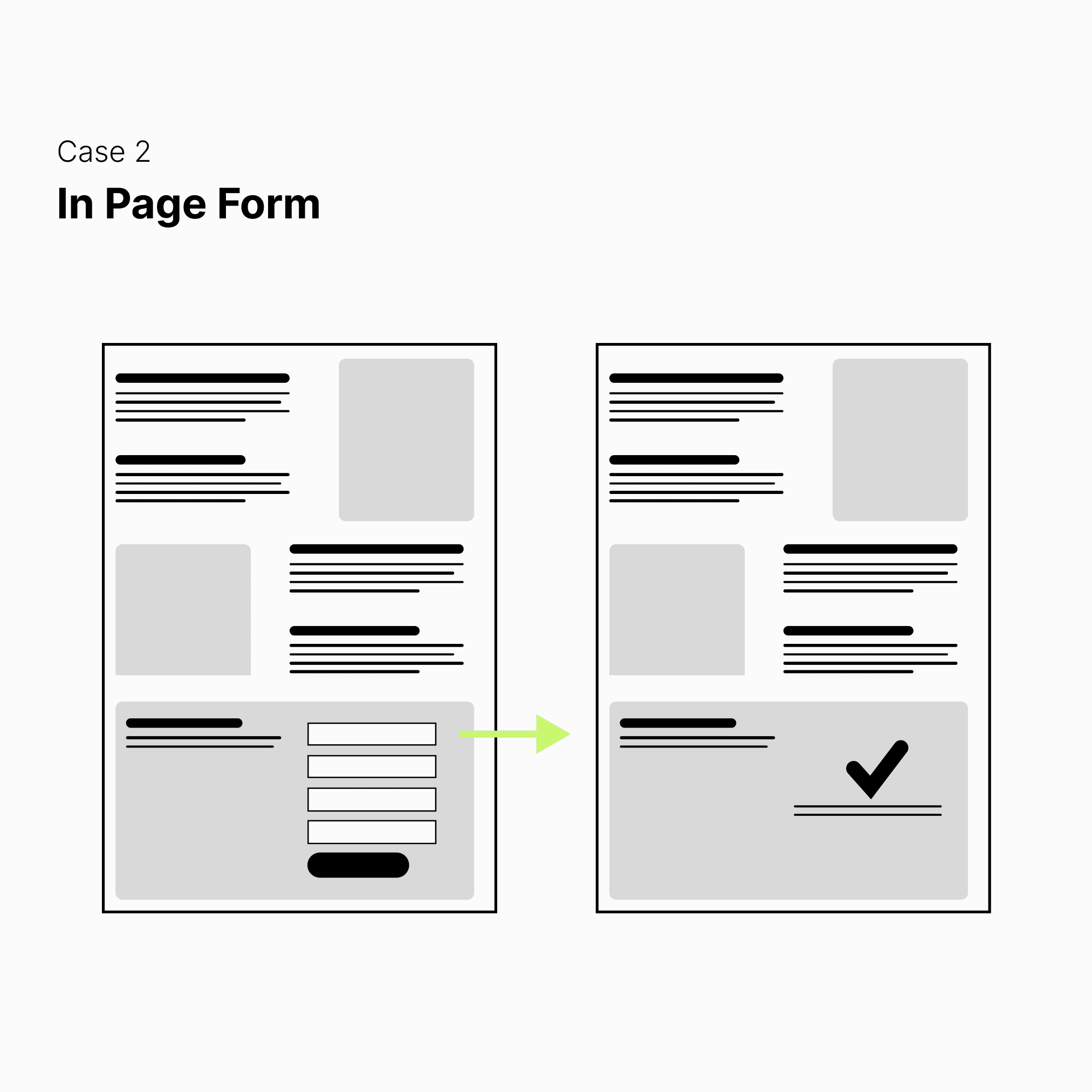
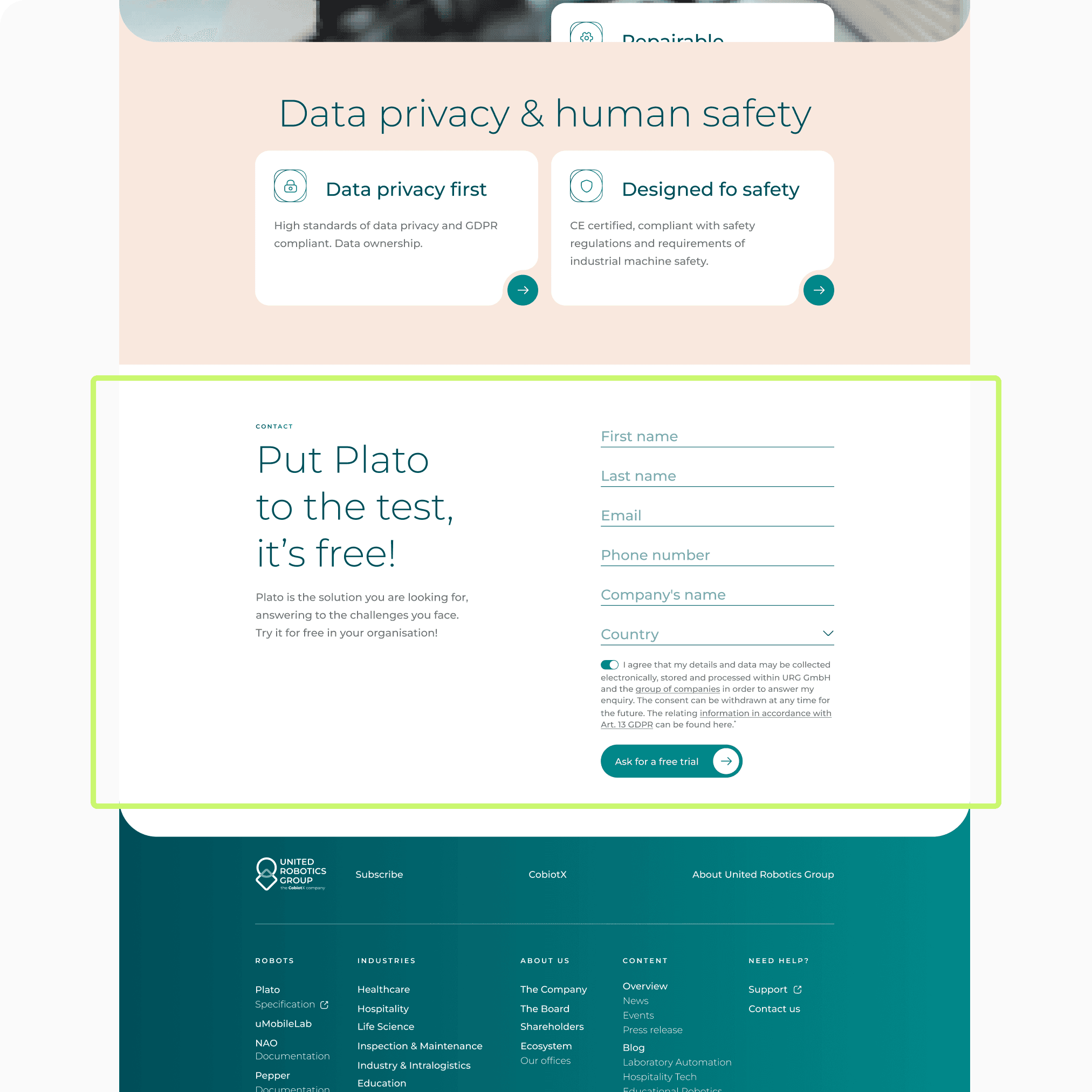
In-page Form: Example of a lead-generation form placed at the bottom of a page, allowing conversion without disrupting the flow.
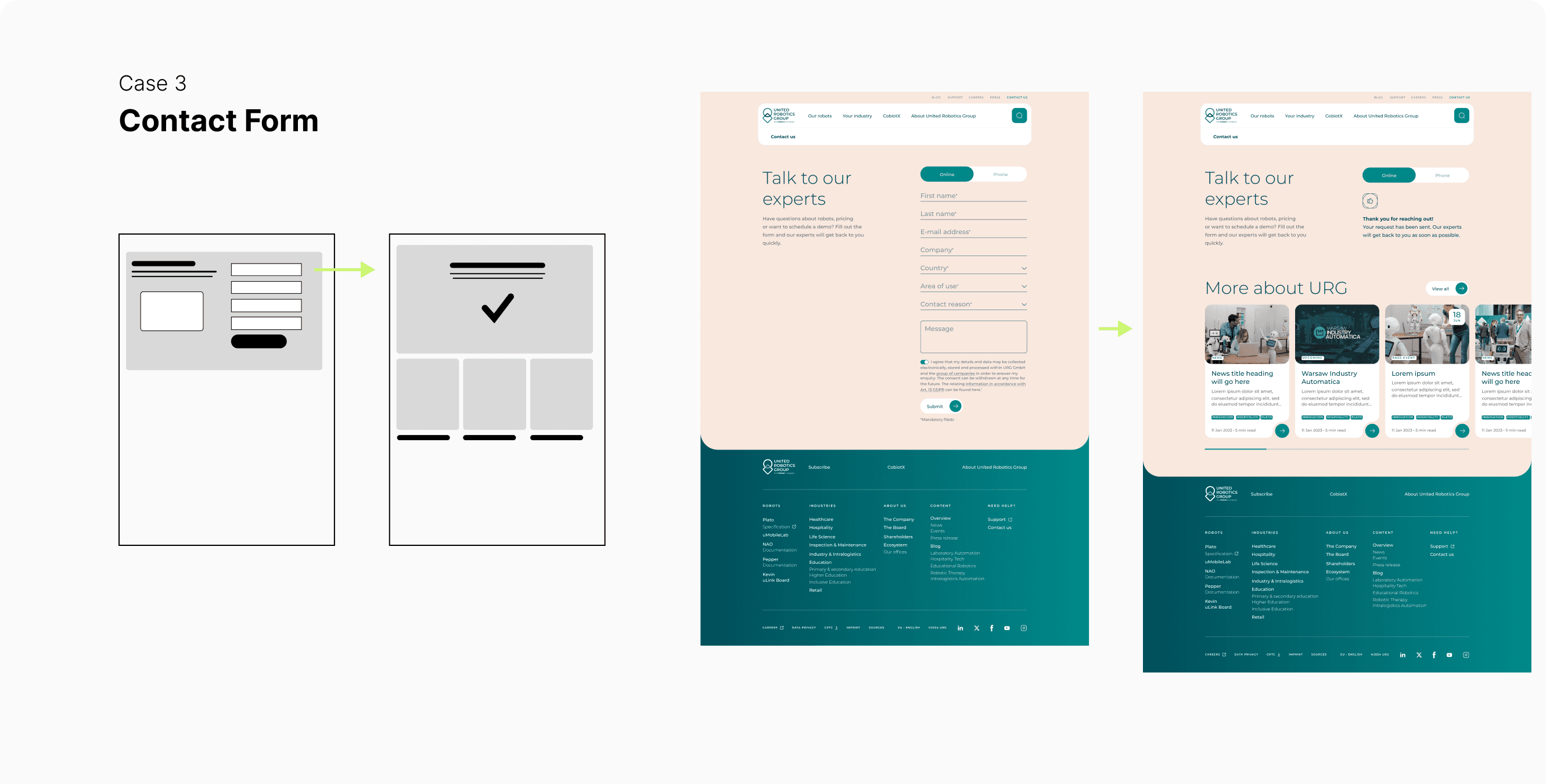
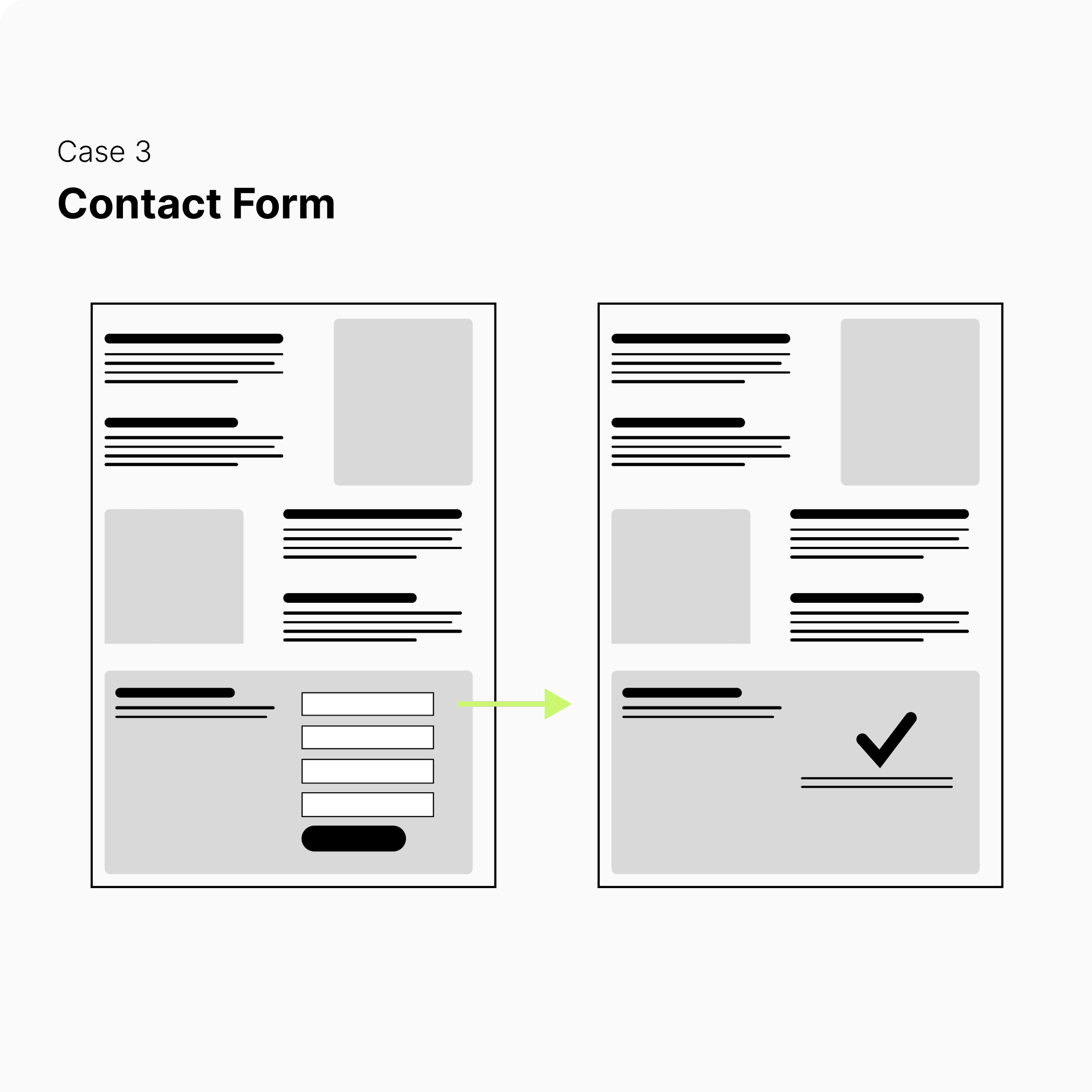
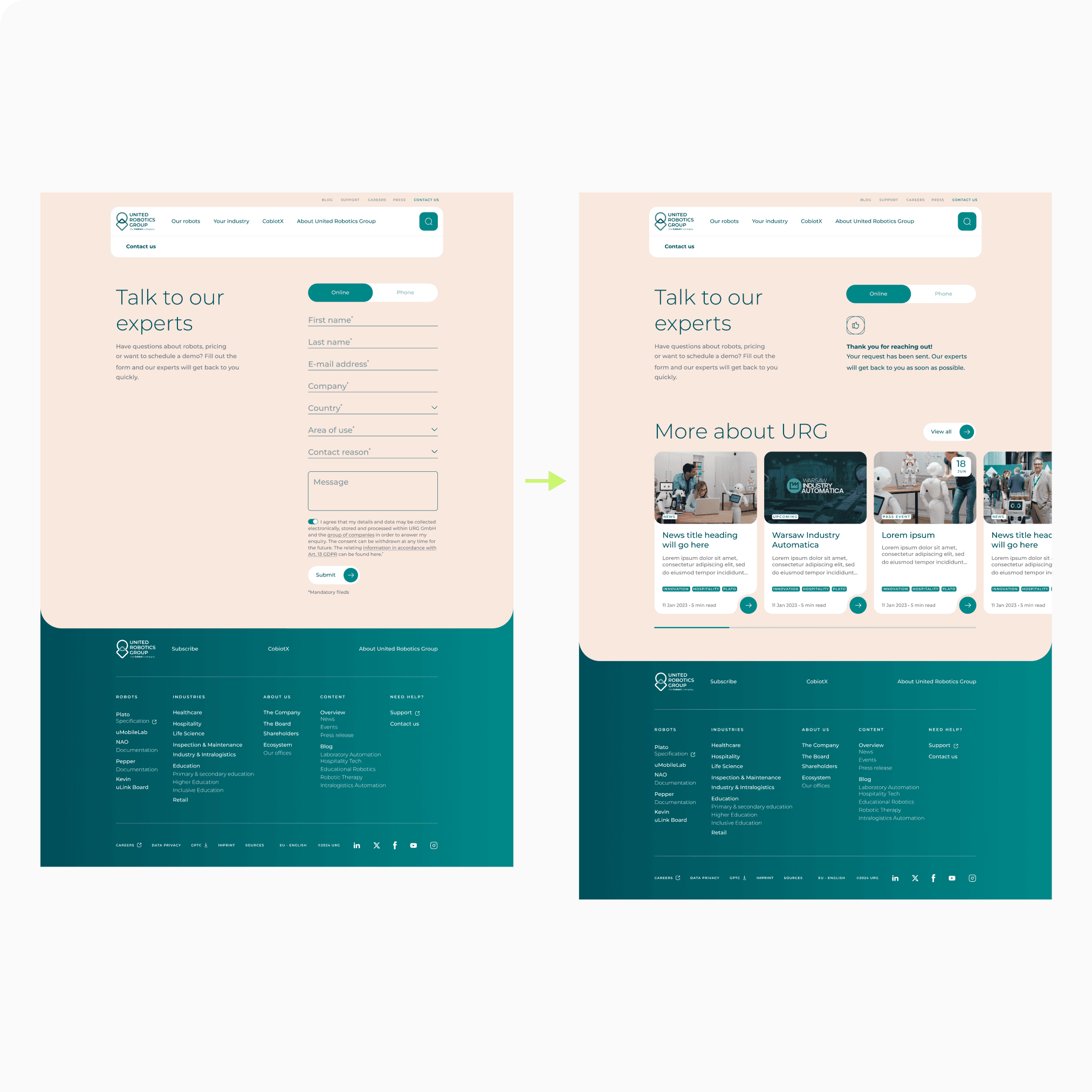
Contact Form: Example of a dedicated contact form redirecting to a thank-you page, designed for high-intent inquiries.
3/ Design, Collaboration & Iteration
Delivered 15+ wireframes for the MVP covering robots, industries, corporate, news, events, and contact pages.
Internally, I Collaborated closely with a senior UX designer, the head of design, a UI designer, developers and a copywriter in an agile set up to ensure storytelling, technical feasibility, and speed.
Launched the MVP in under 5 months for VivaTech 2023. Post-launch, took full ownership as solo UX designer: expanded pages, refined user flows, and partnered with stakeholders to optimize lead-generation outcomes.
takeaways.
High-impact MVP: Delivered 15+ pages for VivaTech, positioning URG as a robotics leader and generating +50% qualified leads in the first quarter.
Design for outcomes: Every page was crafted to support lead generation.
Storytelling simplifies complexity: Translating robotics jargon into human stories to boost engagement.
Agility drives impact: Rapid design, close cross-functional collaboration, iteration, and delivery under tight deadlines strengthened the platform and user experience.
team collaboration.
A Freelance Senior UX Designer (when I started working on this project)
The Head of Design
A UI Designer
Developers
2 Project Managers
An Account Director
Sylvie, URG stakeholder
Romain, external person exposed to the website
Anna, external person exposed to the website