COMPANY:
HITCH
DURATION:
4 MONTHS
ROLE:
PRODUCT DESIGNER
project overview.
As one of two Product Designers within the start-up team, I worked closely with the founders, head of Engineering, developers, my design partner, and psychology experts to shape the product. Together, we defined the roadmap through workshops, prioritizing epics and user stories under tight deadlines. I led user interviews, designed key candidate and recruiters flows and test interfaces, delivered mockups, and co-created a design system from scratch, documenting it for developers. I also built prototypes to communicate interactions and flows, presented iterations to the team, and incorporated feedback to align stakeholders and accelerate delivery.
Skills involved:
User Research
Roadmap & Backlog Planning
Mockups
End-to-end Product Design
Design System Creation & Documentation
Prototyping
UX Strategy
Stakeholder Alignment
business context.
Hitch is a Mexico-based SaaS start-up rethinking recruitment by combining AI, psychology-based assessments, and customizable workflows. The platform serves two audiences: recruiters, who need flexible tools to evaluate talent effectively, and candidates, who expect a transparent and motivating experience with actionable feedback.
challenge.
How might we design a recruitment platform that is:
Configurable enough for recruiters to build workflows adapted to their hiring needs.
Data-driven yet simple, so results dashboards accelerate decision-making rather than overwhelm.
Engaging and transparent for candidates, offering feedback and opportunities to learn.
Fair and bias-reducing, leveraging psychology expertise to make hiring more inclusive.
objectives.
Build a seamless end-to-end experience across recruiter workflows, candidate assessments, and results dashboards.
Ensure parity between business efficiency (time-to-hire, quality of insights) and candidate satisfaction (clarity, fairness, engagement).
Deliver a scalable foundation (design system, responsive layouts) to support product growth.
approach.
1/ Discovery & Alignment
To ground the product vision, I conducted 7 in-depth interviews with recruiters, analyzed findings through affinity mapping, and combined them with a competitive benchmark. This uncovered key insights that directly shaped the design strategy:
Trust is critical → Transparent process steps and clear recruiter–candidate communication.
Soft skills matter as much as hard skills → Configurable filters and assessments beyond CVs.
Reducing cognitive load → Recruiters manage multiple job openings and candidates and need an interface that simplifies decision-making. Workflows and dashboards prioritize information, automate repetitive tasks, and provide clear cues at each step, allowing recruiters to focus on key decisions without getting lost in complexity.
Building on these findings, we mapped the flows and interconnections between the recruiter profile, the candidate profile, and the results dashboard—ensuring that insights could move seamlessly across the platform.
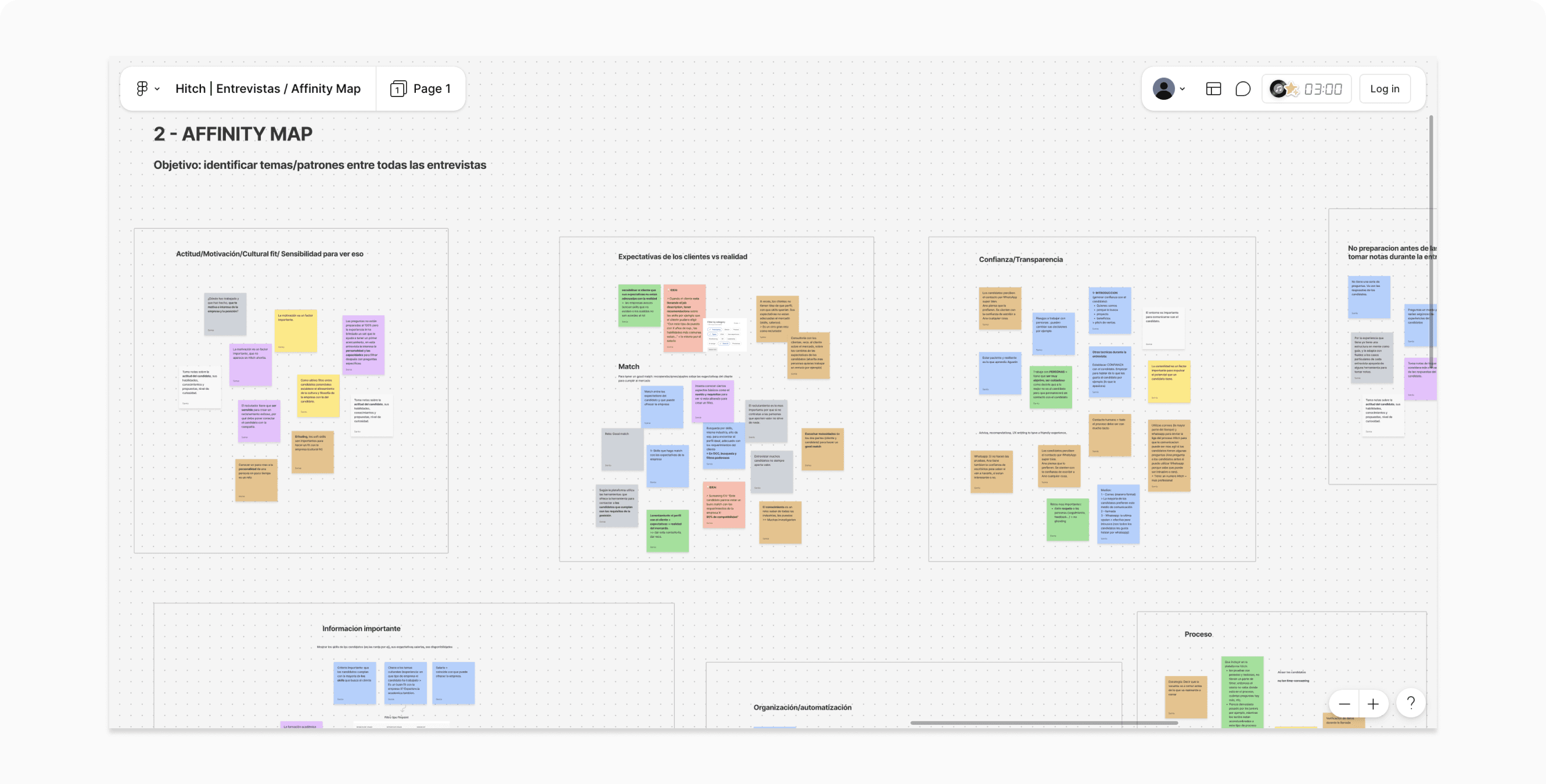
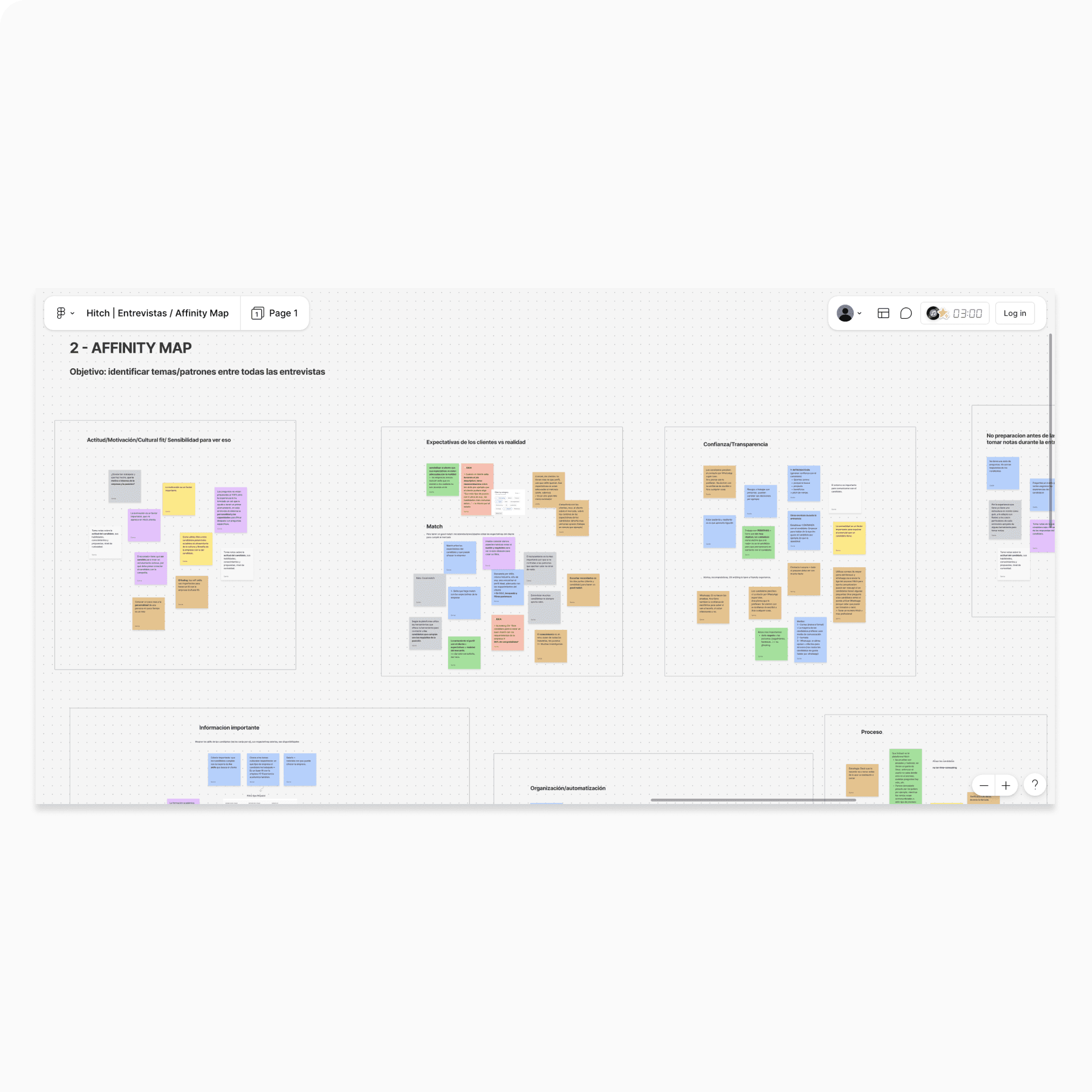
Affinity map: Synthesizing recruiter interviews into common themes that revealed pain points and unmet needs.
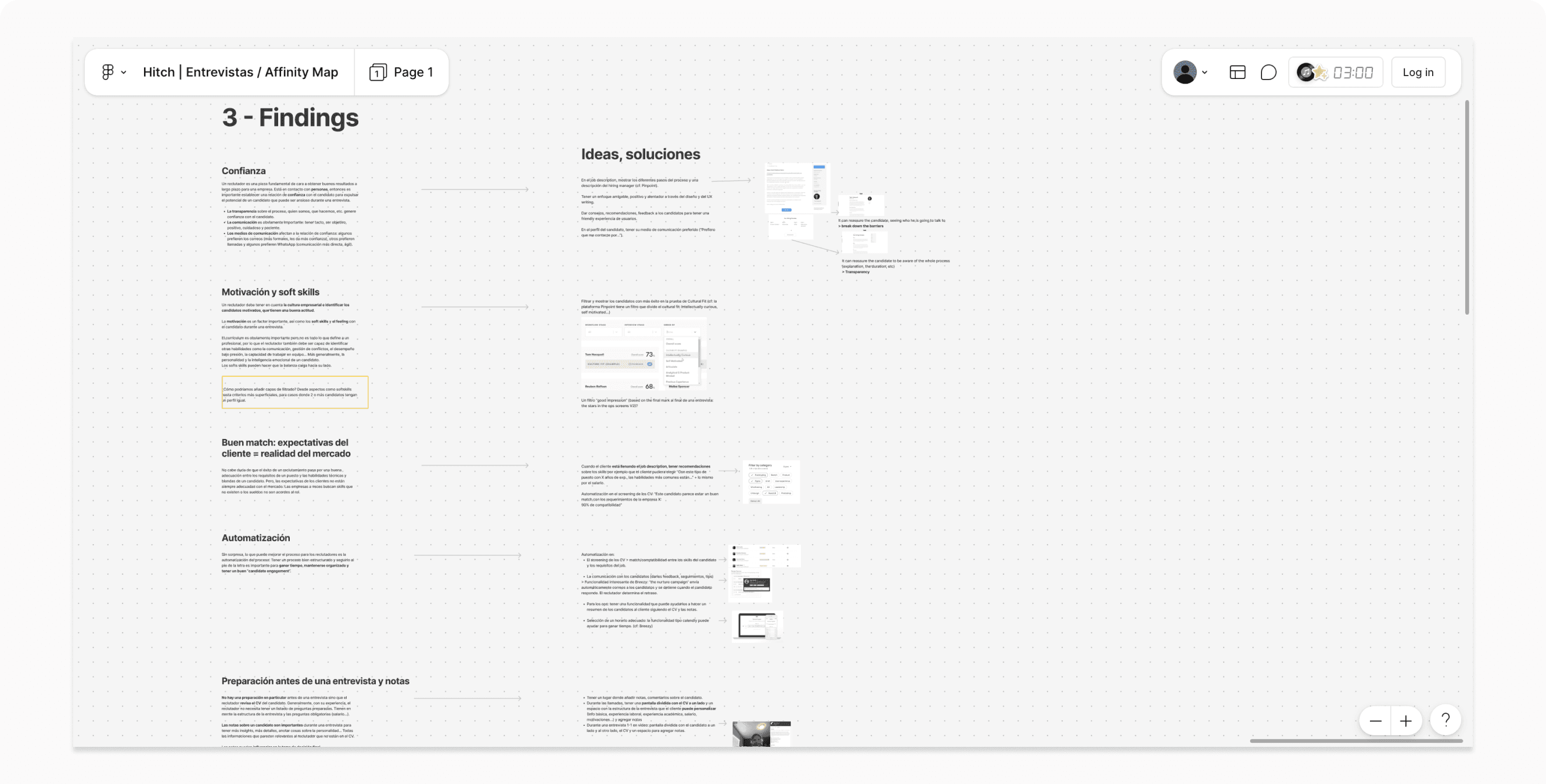
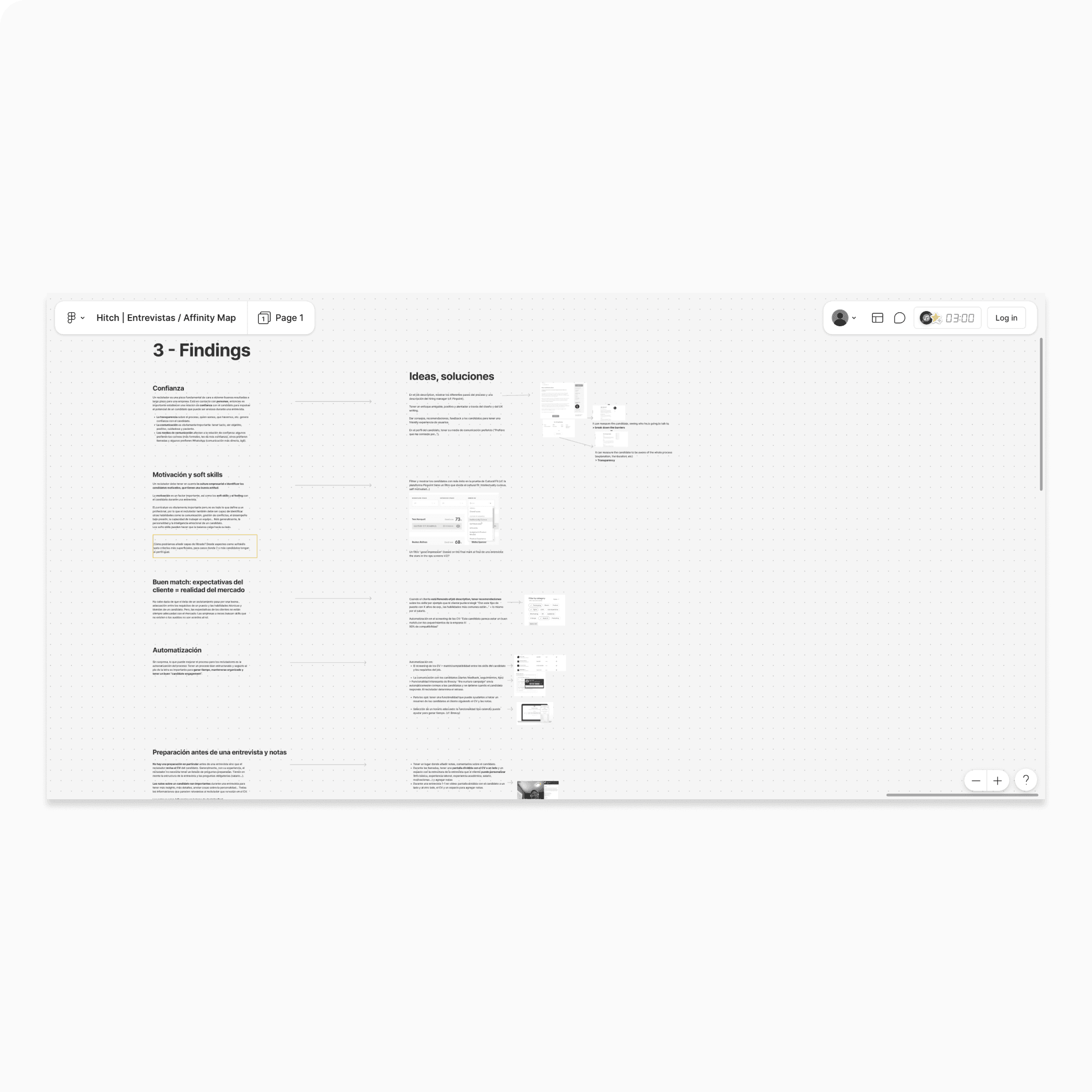
Insights + Ideas: Linking insights to solution opportunities identified during competitive analysis.
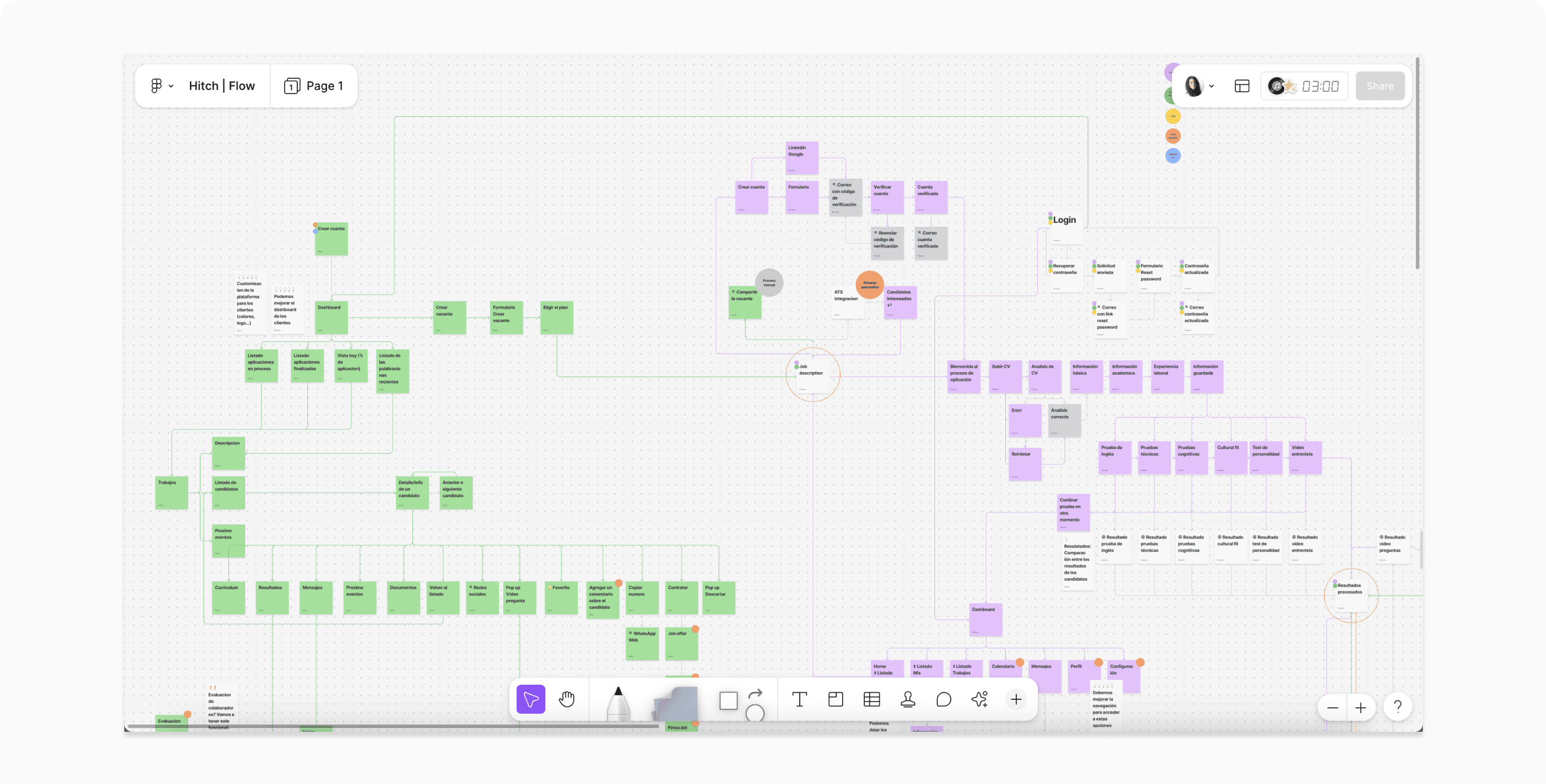
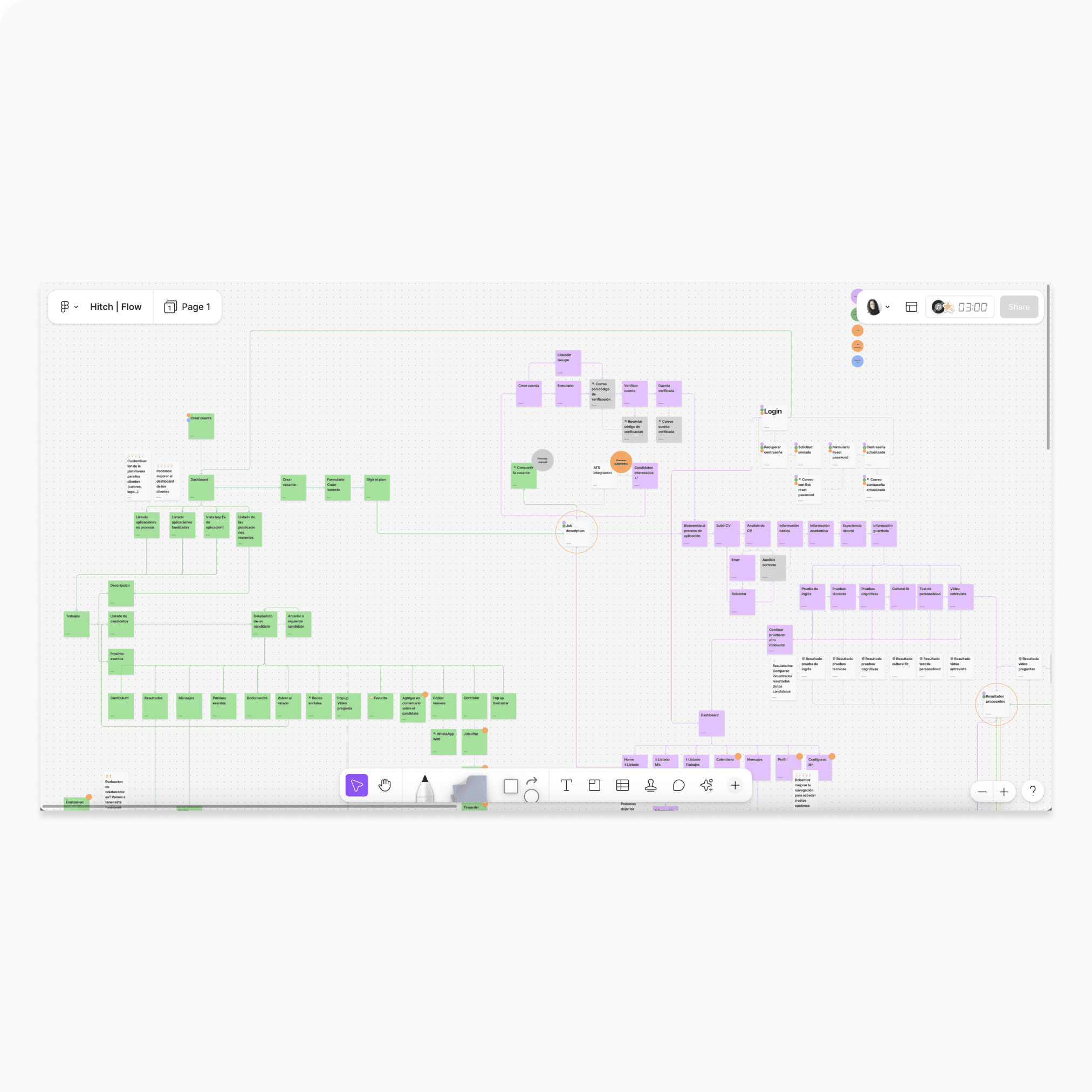
Flows: Mapping recruiter and candidate journeys to define how profiles, evaluations, and results interconnect.
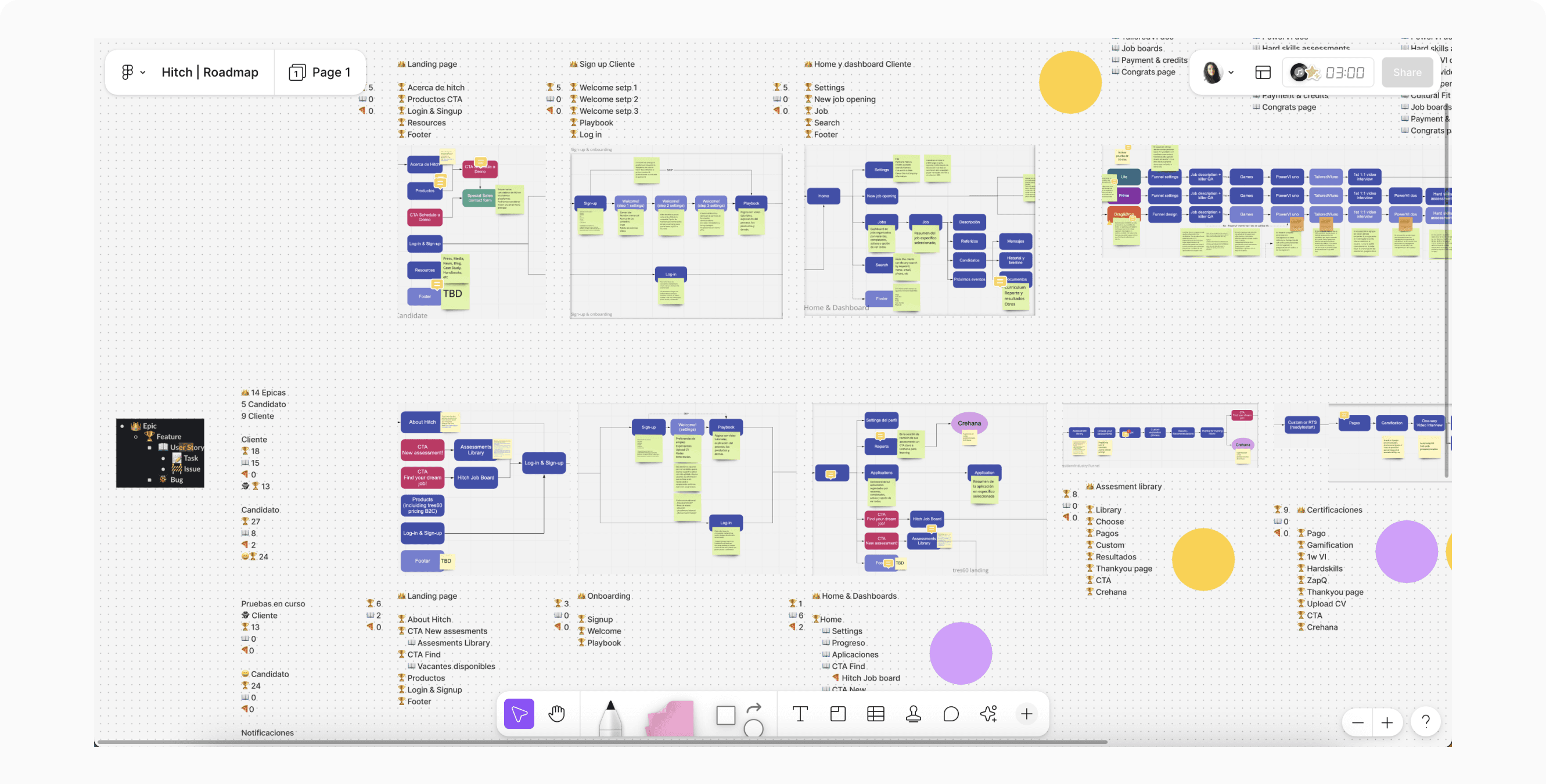
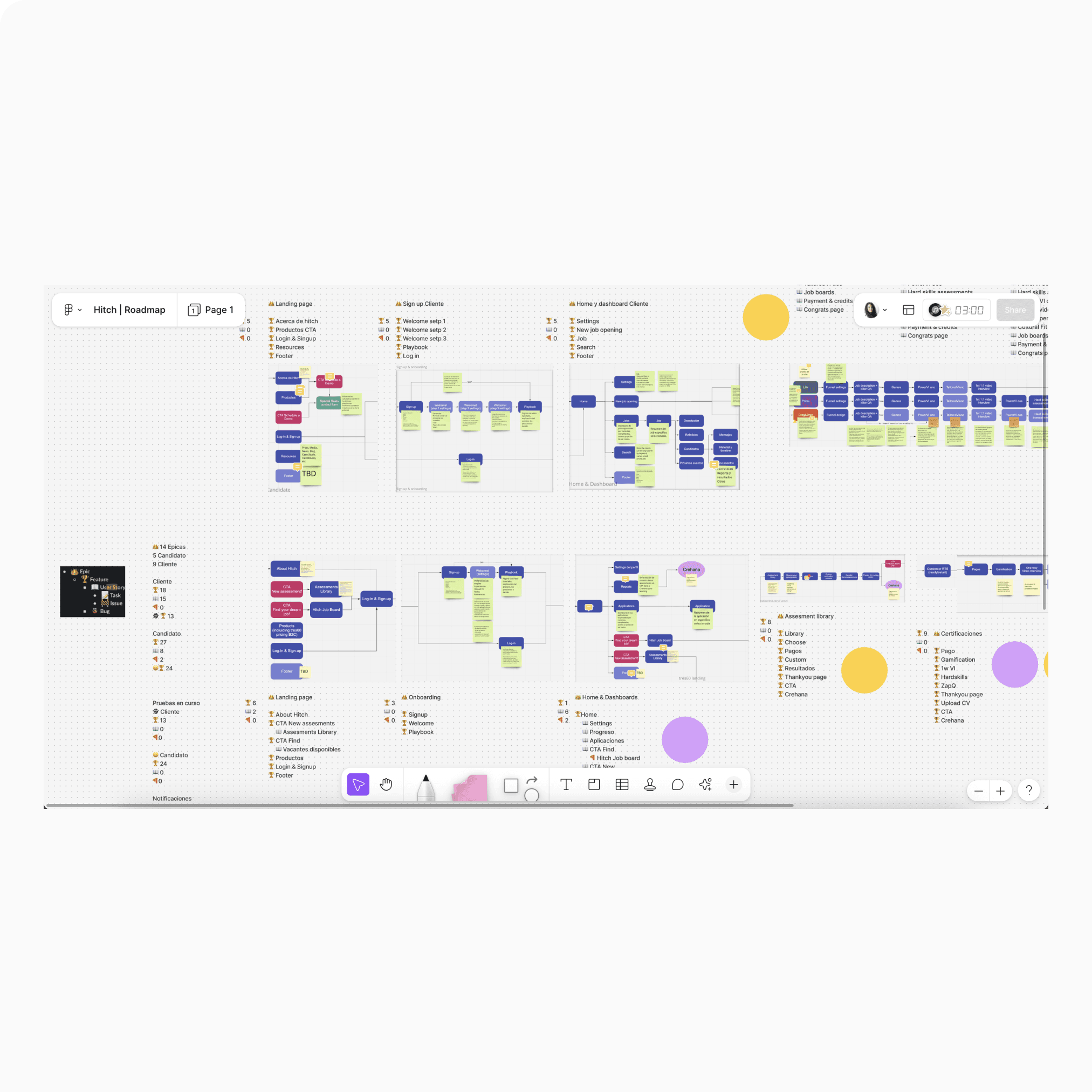
Product Roadmap Workshop: Collaborated with founders and developers in a workshop to structure the product vision into actionable epics, features, and user stories. This roadmap aligned business priorities with technical feasibility, ensuring design, product, and engineering worked from a shared foundation.
2/ Structuring the MVP
I translated the research into high-fidelity prototypes that captured the end-to-end recruitment journey, prioritizing the main features for the MVP. This included:
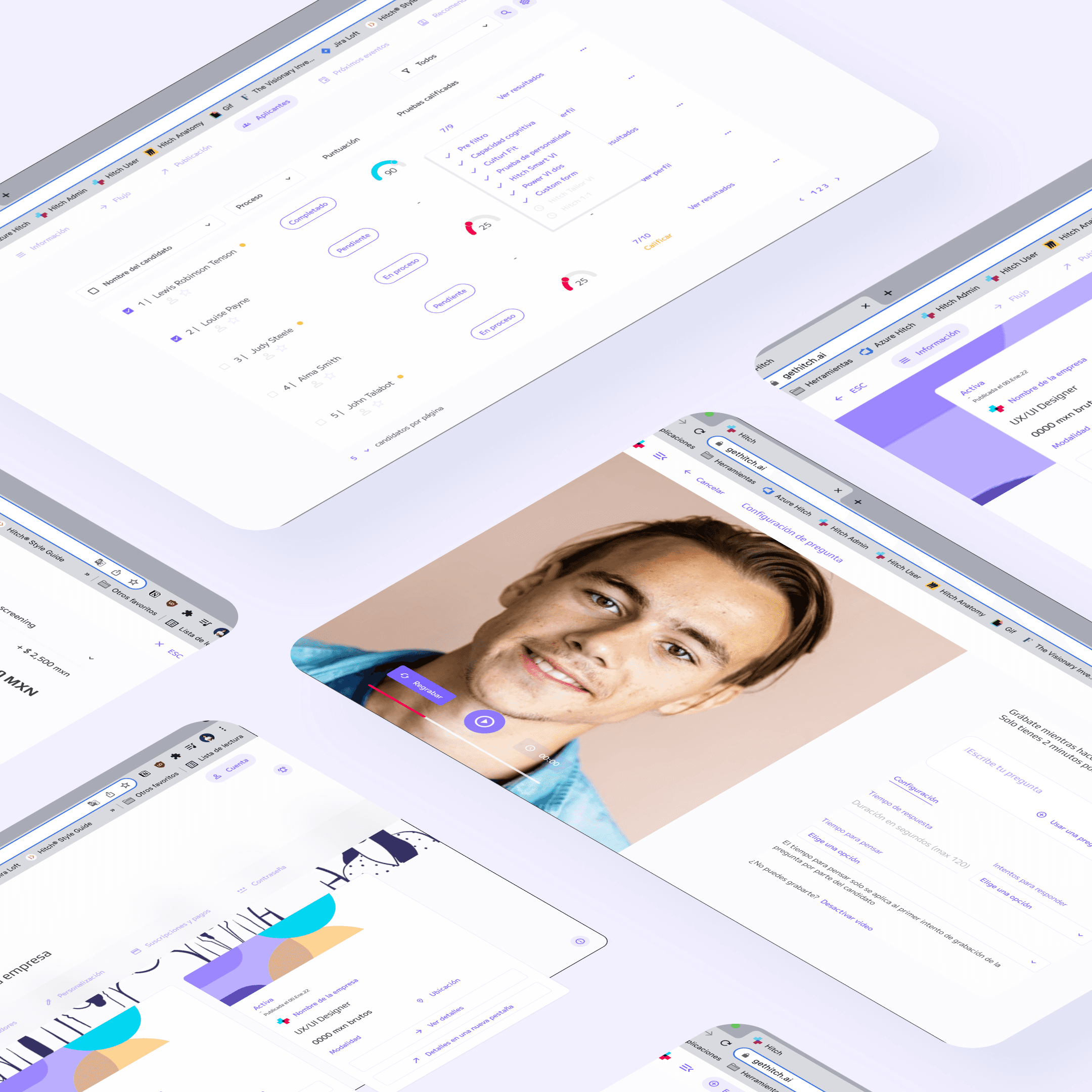
Recruiter flows: creating job postings, selecting assessment types, managing results in the dashboard.
Candidate flows: completing their profile, responding to psychological tests, recording video responses, and tracking application status.
Built a scalable design system, ensuring consistency across desktop, tablet, and mobile.
These prototypes established the UX/UI foundation of the platform and were used directly in usability testing to validate core tasks.
Throuout all the project, I worked hand-in-hand with a fellow designer to translate complex workflows into an intuitive, engaging interface.
Account Interface for Recruiters:
Interactive prototypes illustrating the recruiter account structure, used to align the team on core functionalities and flows.
Recruiter Workflow: End-to-end workflow where recruiters can create and publish job offers: write a description, configure the recruitment process by selecting and customizing candidate assessments, manage payment, and diffuse the offer across platforms.
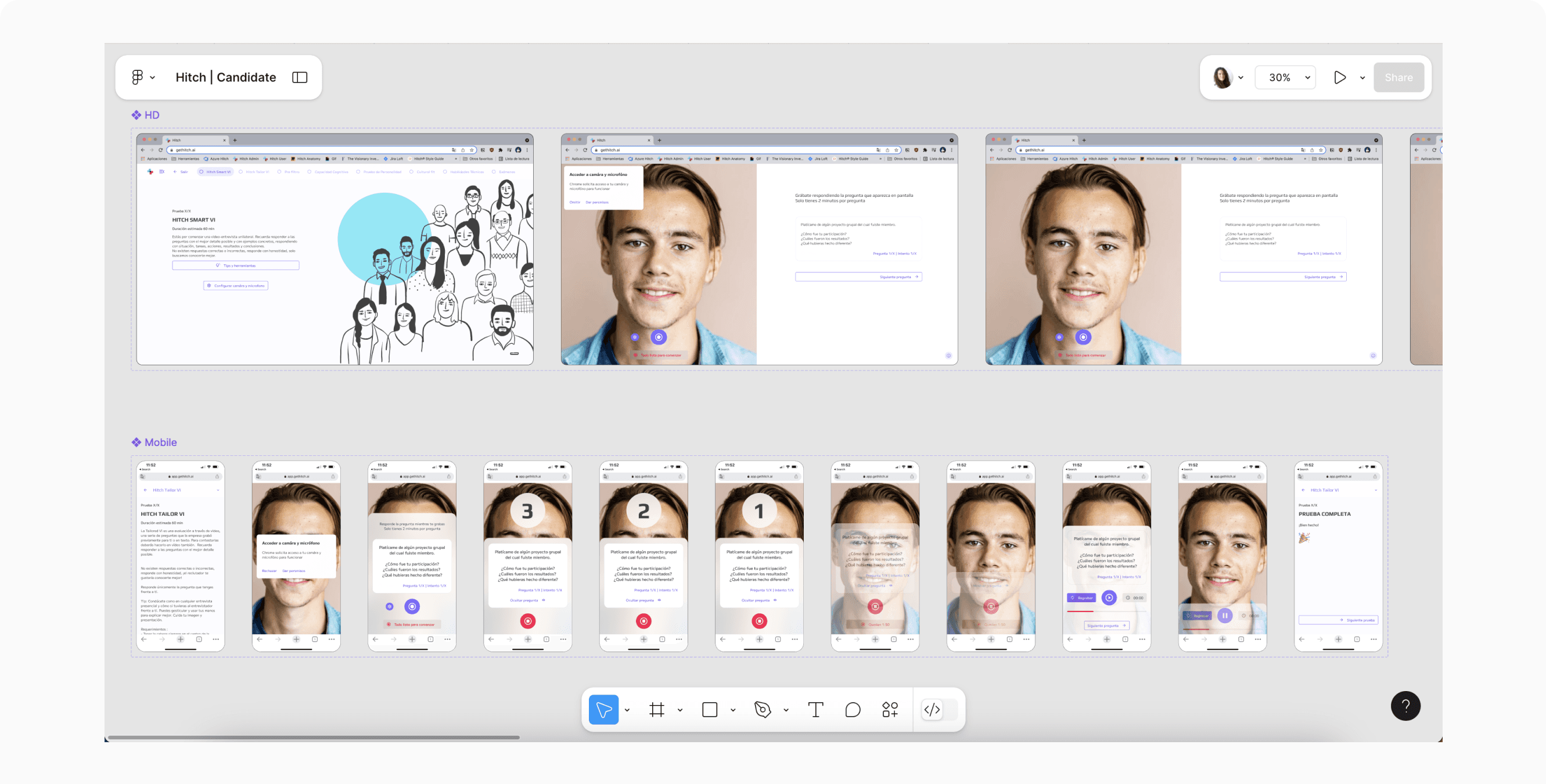
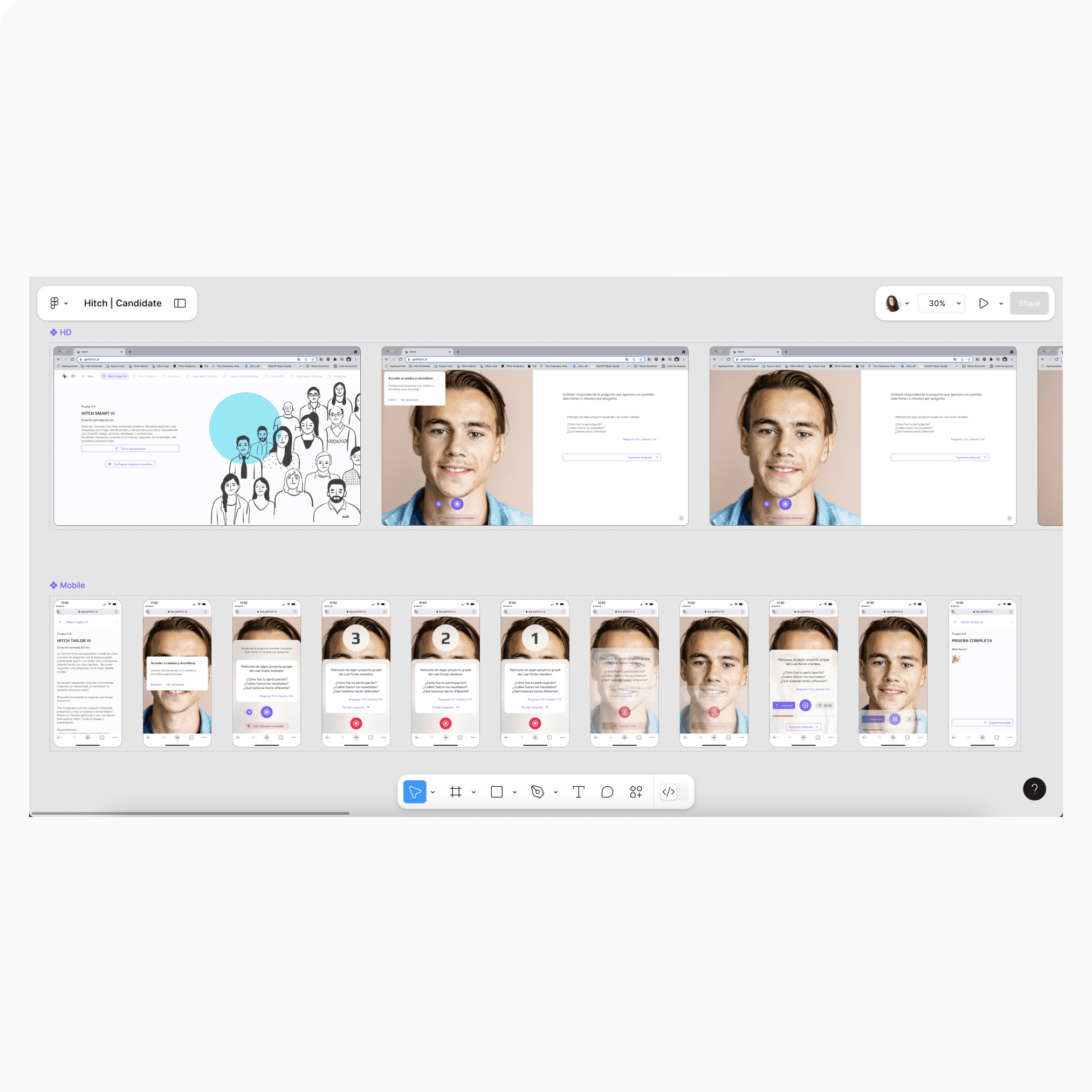
Candidates Interface: Sample screens showcasing how assessments and feedback would appear to candidates, ensuring a seamless and engaging experience.
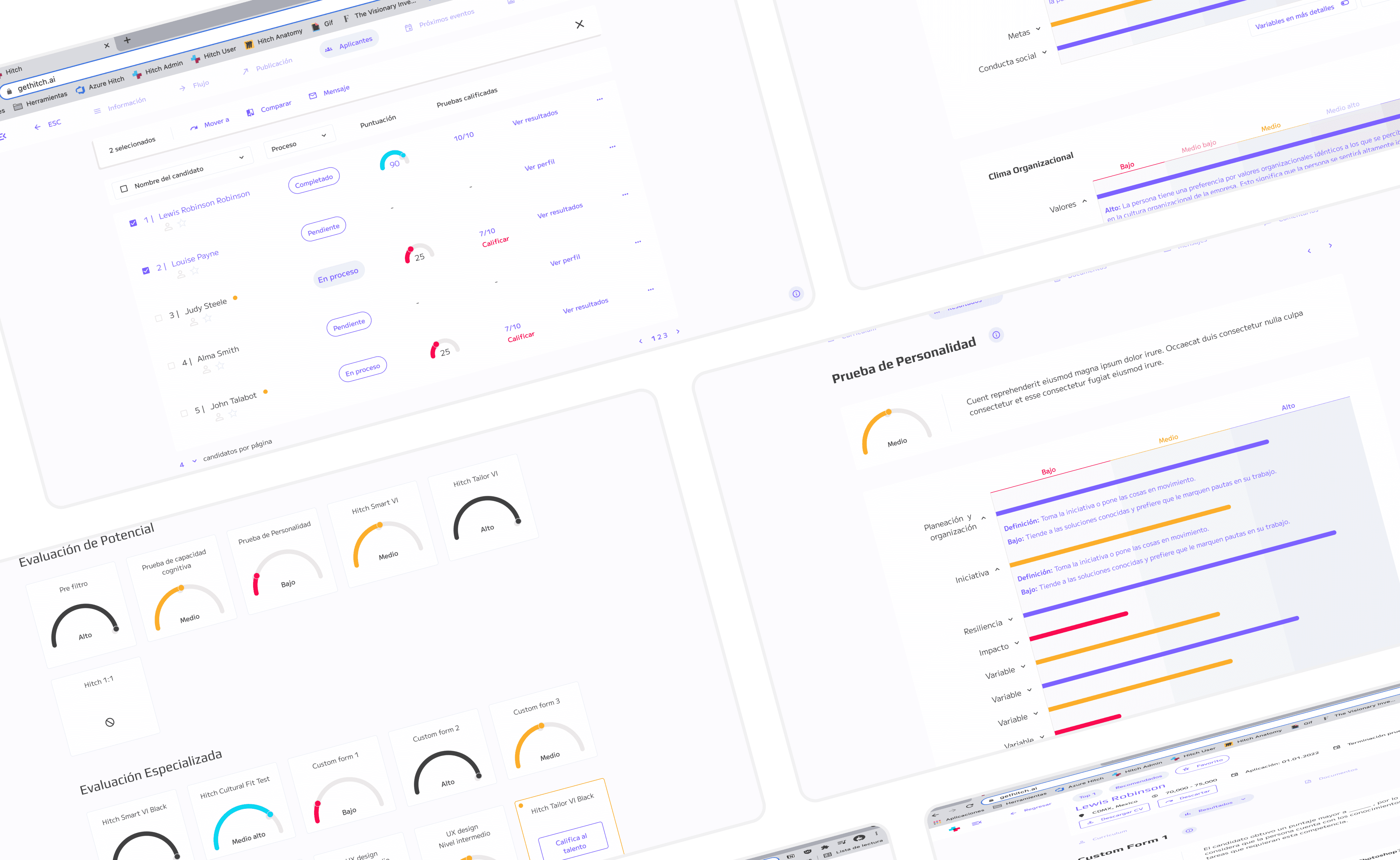
Results Dashboard: Configurable results dashboards give recruiters full control to weight assessments based on the role’s priorities, track candidate progress across each stage, and dive into detailed module outcomes. Recruiters and their teams can add evaluations, ratings, and comments—creating a collaborative, data-driven decision-making process aligned with hiring objectives.
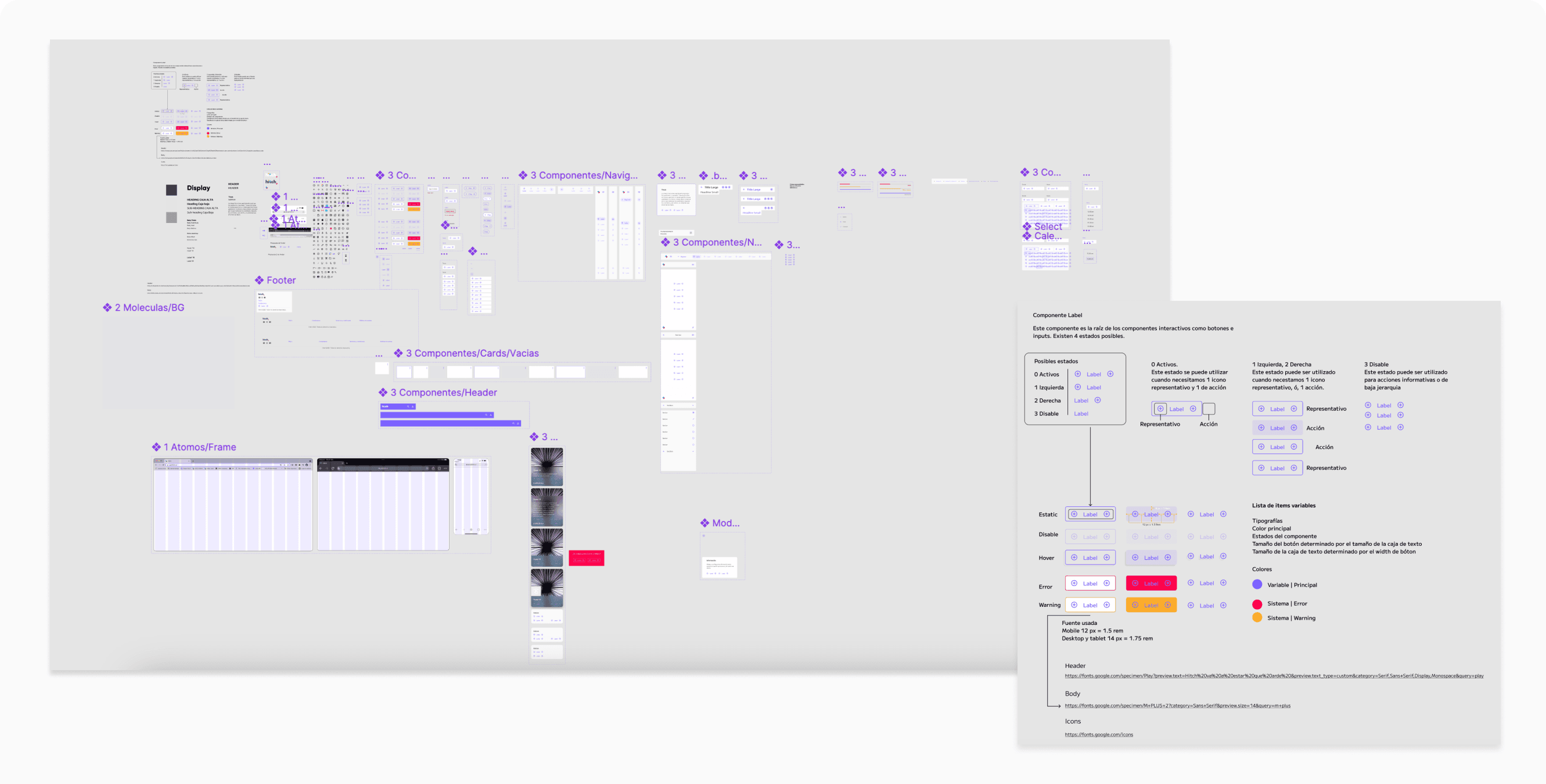
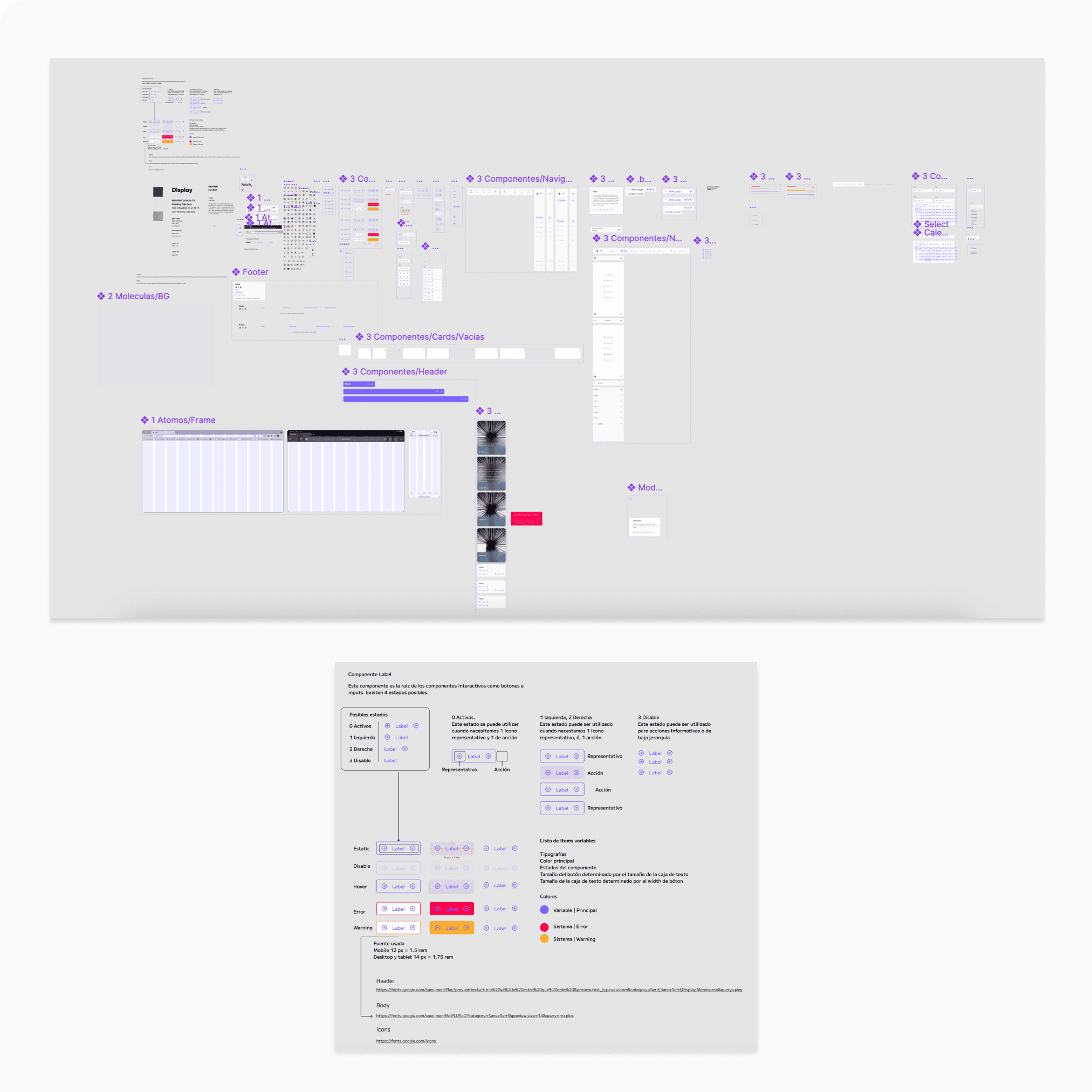
Design System: Foundational design system establishing visual consistency and scalability across recruiter and candidate interfaces.
3/ Usability Testing (Validation & Refinements)
To validate the new flows, I conducted remote moderated usability tests with 10 participants (5 recruiters, 5 candidates).
Process:
Format: Zoom sessions with interactive Figma prototypes
Session length: ~30 minutes each
Candidate tasks: complete a psychological test and submit a video response
Recruiter tasks: create a recruitment flow by assigning tests, then review and interpret candidate results in the dashboard
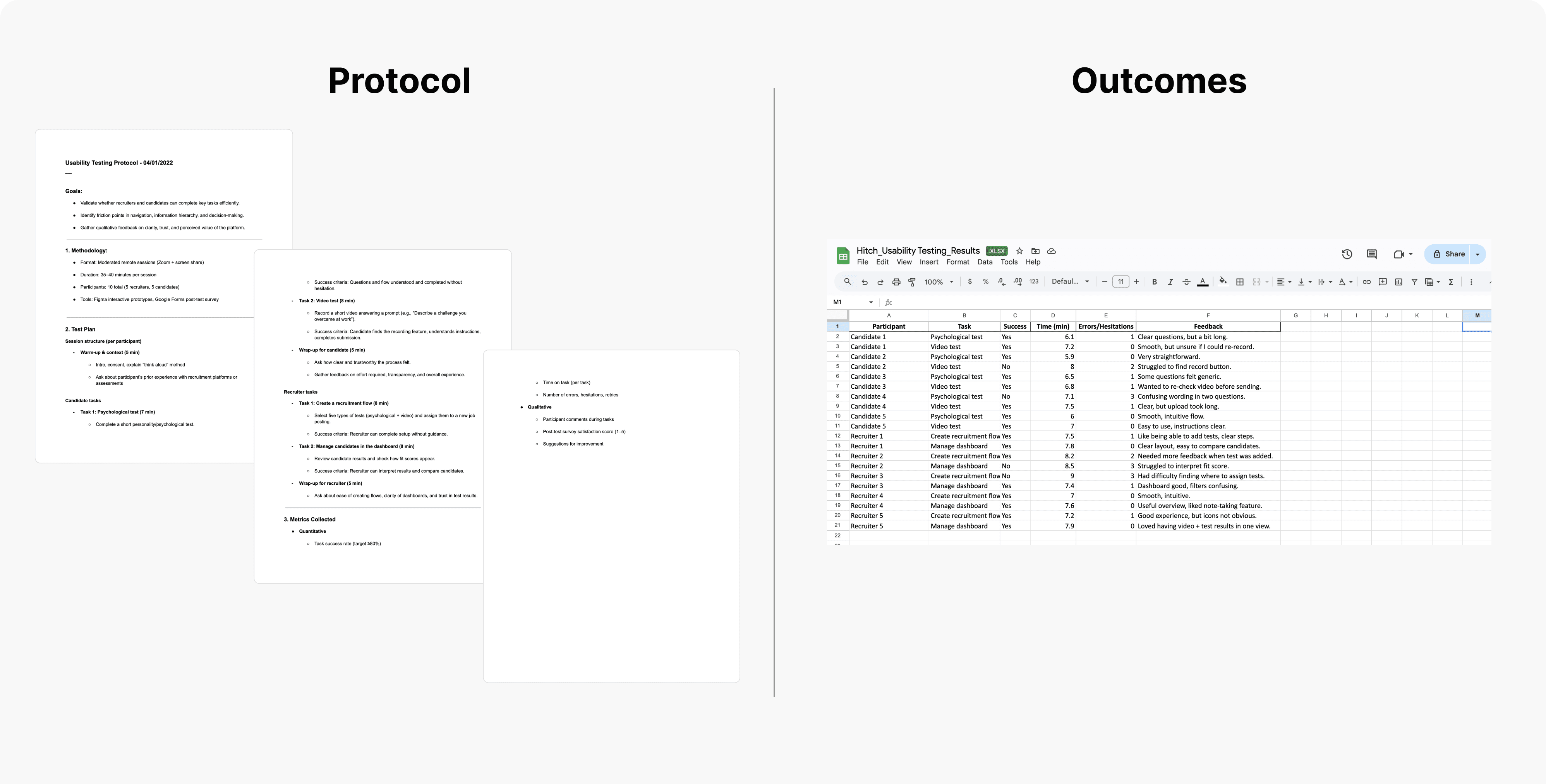
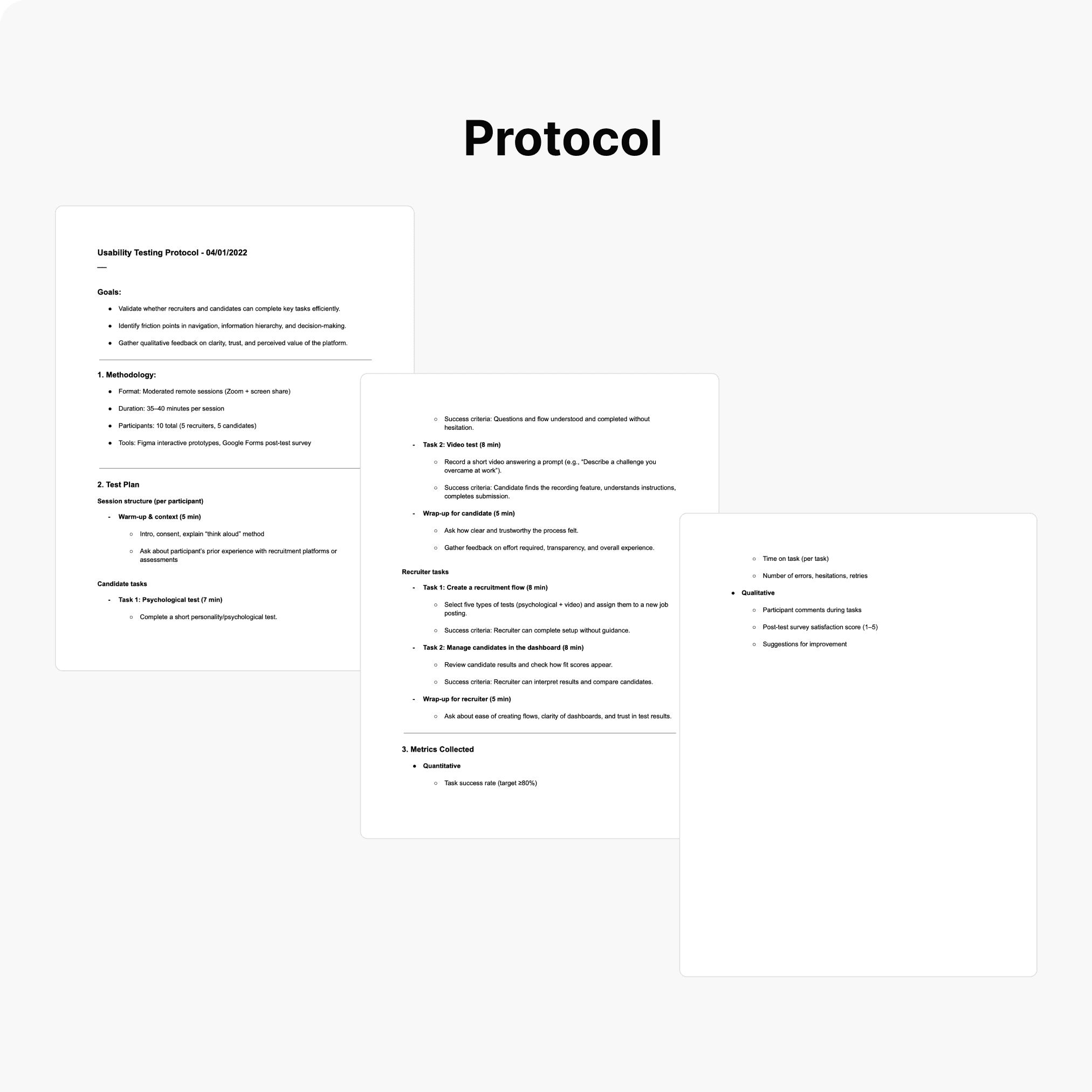
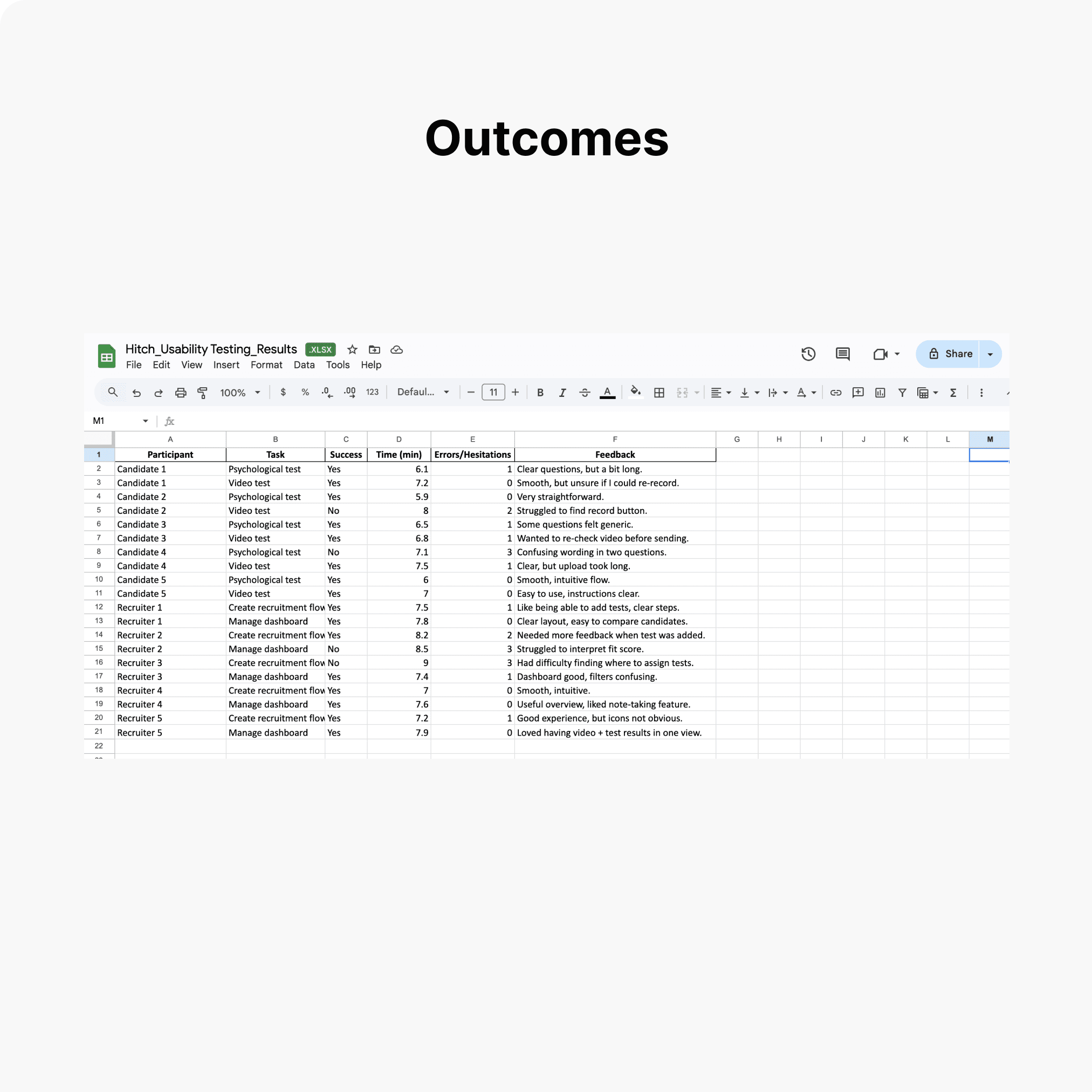
Protocol and outcome work documents used
Outcomes
Overall task success rate: ~80% — most participants completed their tasks, but some struggled with navigation between steps, which slowed them down.
Candidate experience:
> Instructions for the psychological test were generally clear, but some found the questions too long or generic, and one struggled with confusing wording.
> For the video test, participants liked the option to re-record but weren’t always sure how many retries they had. Upload speed also caused frustration for one candidate.
> Several candidates wanted a way to review their video before final submission.
Recruiter experience:
> Creating flows was mostly successful, with participants appreciating the clear layout and ability to compare candidates in the dashboard results.
> However, some had difficulty locating where to assign new tests to some candidates already in the recruitment process.
> A key pain point was the fit score visualization: while the presence of the score increased trust, recruiters wanted more context (definitions, or visual cues) to confidently interpret what the score meant.
Overall perception: Both groups described the flows as intuitive and smooth when tasks worked, but small friction points (confusing wording, unclear icons, missing feedback loops) slowed them down and highlighted opportunities for refinement before launch.
takeaways.
Thriving in a fast-paced start-up: Learned to move from insights to prototypes in days, not weeks—adapting quickly while still keeping designs tied to long-term vision.
Balancing two user groups: Designing simultaneously for recruiters and candidates required constant reframing—optimizing recruiter efficiency while safeguarding candidate fairness and transparency.
Cross-disciplinary collaboration: Working hand-in-hand with a fellow designer, developers and psychology experts ensured the platform was both technically feasible and aligned with inclusive, bias-aware hiring practices.
This project reinforced my ability to shape a complex SaaS platform from the ground up—balancing speed, stakeholder needs, and user fairness to deliver a scalable recruitment experience.
team collaboration.
Founder & Co-founder
Head of Engineering
10+ Developers
Fellow Product Designer
4 Psychology Experts
Freelance Copywriter
Gabriela Ceballos, Hitch Founder